







By: Vicent Morris
A surprising number of contemporary romances are built around people falling in love while barely speaking honestly to each other. Twinkle of Doubt goes in the opposite direction. Patricia Leavy is much more interested in what happens after two people already know each other deeply and still have to wake up every morning choosing vulnerability anyway. That shift changes the novel’s emotional texture completely. This is not a romance powered by misunderstandings, flirtation games, or performative emotional distance. It is about intimacy after survival. About what happens when two people who have already been damaged try to build something steady without pretending the damage disappeared.
The novel continues the story of Tess Lee and Jack Miller two years into their marriage. Tess is a bestselling inspirational novelist whose public persona revolves around healing and hope. Jack works in federal counterterrorism and carries the psychological residue of years spent living inside danger and hypervigilance. On paper, the pairing sounds almost suspiciously idealized, but Leavy gives the relationship enough emotional specificity that it starts to feel lived-in rather than aspirational.
What struck me most is how calm the novel often is. Not boring, calm. Intimate calm. The kind that comes from two people paying close attention to each other. Leavy spends an unusual amount of time inside conversations, emotional check-ins, shared routines, moments of reassurance, and the tiny negotiations that make long-term relationships either survive or quietly collapse. The suspense plot involving anonymous threats against Tess exists, but mostly as pressure. The real conflict lives underneath it. Fear of loss. Fear of inadequacy. Fear that love might still vanish despite everything.
Leavy has a background in sociology and arts-based research, and you can feel that psychological awareness in the writing. She understands how trauma reshapes self-worth long after visible healing begins. Tess and Jack are not simply battling external threats. They are battling the quieter internal reflex that tells wounded people they are difficult to love permanently. The novel keeps circling that emotional territory with surprising patience.
There is also something refreshing about how emotionally mature the book feels. So much romance fiction mistakes chaos for passion. Twinkle of Doubt does not need screaming matches or manipulative plot twists to generate emotional tension. Instead, it asks harder questions. What does trust look like after fear becomes part of your nervous system? How do you stay emotionally available when your instinct is self-protection? How do people maintain tenderness while carrying histories that taught them tenderness was unsafe?
The chosen family dynamic surrounding Tess and Jack gives the novel additional warmth. Friends and emotional support systems are treated as essential architecture rather than decorative side characters. That attention to community makes the story feel fuller and more humane.
Readers expecting fast-paced suspense may find the rhythm slower than standard romantic thrillers. Personally, I think the contemplative pace is exactly what allows the emotional material to breathe. Leavy trusts quiet scenes enough to let them matter. She also keeps the romance closed-door, which oddly intensifies the intimacy instead of reducing it. The emotional exposure carries more weight because the novel is not relying on physical spectacle to manufacture closeness.
By the end, Twinkle of Doubt becomes less about danger itself and more about the exhausting courage required to remain emotionally open after life has already frightened you badly. That gives the novel its staying power. It lingers not because of the suspense mechanics but because it understands something many romances avoid admitting. Love is not the disappearance of doubt. Sometimes it is the decision to stay anyway.
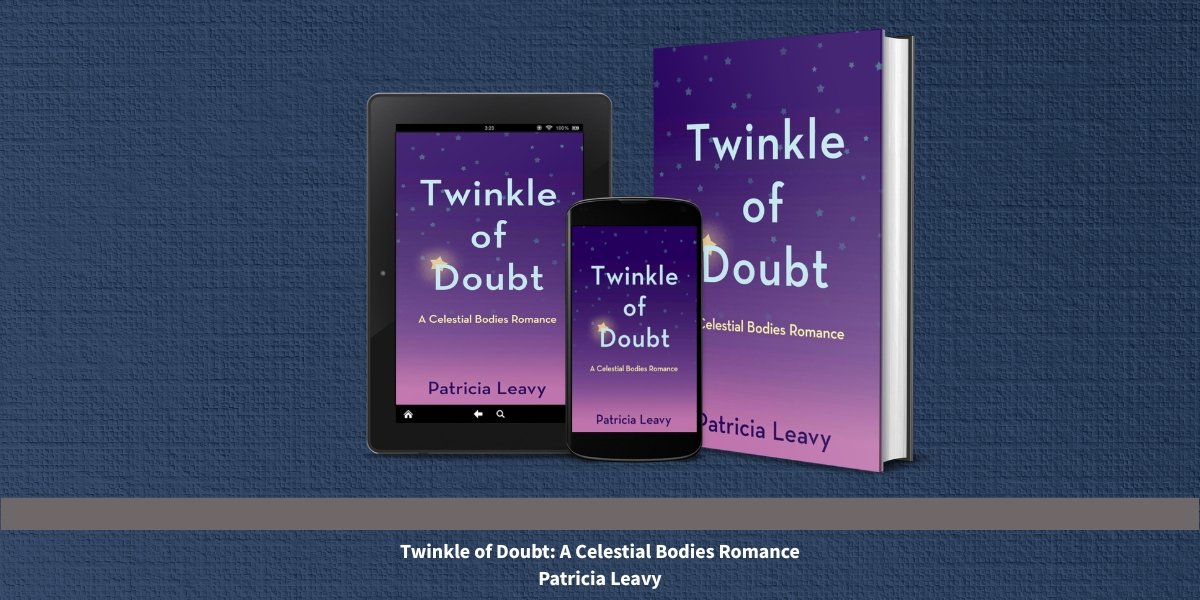
Patricia Leavy’s Twinkle of Doubt: A Celestial Bodies Romance blends romance and emotion, exploring love, uncertainty, and connection. The novel is available on Amazon.
