Portland News

Tejas Desai Expands His Ambitious Literary Vision in Bad Americans: Part II

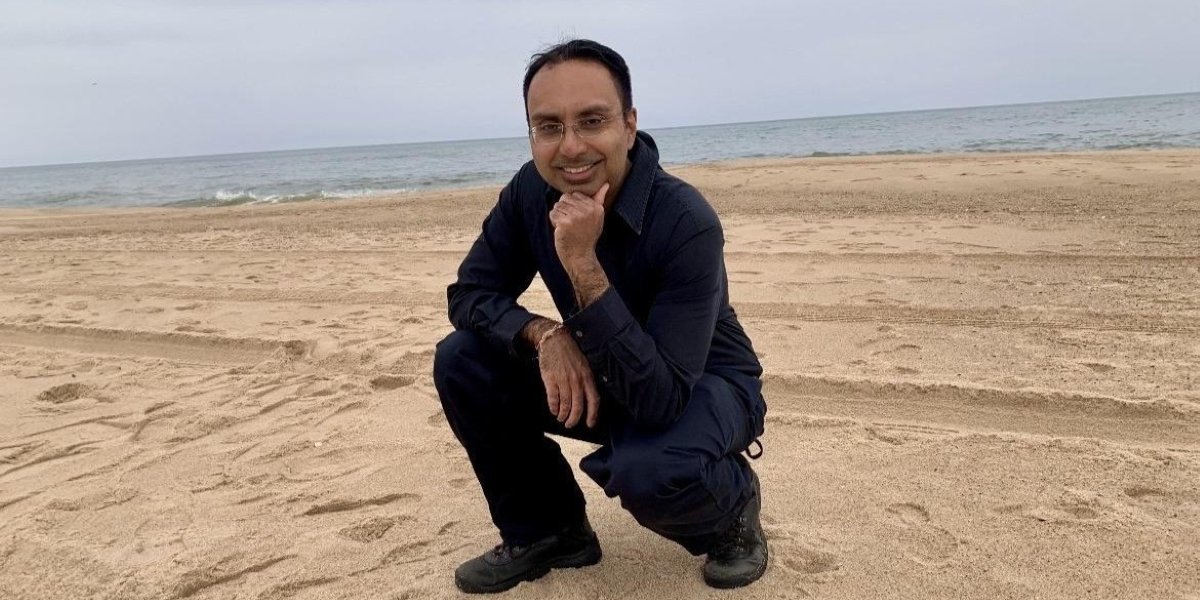
By Alex Diaz

Author Tejas Desai is continuing to push the boundaries of modern literary storytelling with the release of Bad Americans: Part II, the latest installment in his evolving The Human Tragedy series. Drawing inspiration from classic frame narratives while exploring deeply contemporary themes, the novel combines layered storytelling, romance, social tension, identity, and human connection into what Desai describes as “an extravaganza of storytelling and entertainment as well as the pleasures and punctures of life.”

Unlike conventional story collections, Bad Americans: Part II operates through a larger frame narrative where characters tell interconnected stories that reflect not only their personal experiences but also broader cultural tensions. Stories such as “A Model Citizen,” “Cape Conundrum,” “A Manchurian Algerian,” and “Dope Double Ditty” all stand independently while contributing to the emotional architecture of the novel as a whole.

Desai explained that balancing separate narratives while maintaining emotional cohesion became one of the book’s greatest creative challenges. “Since the reader knows the characters better in Bad Americans: Part II, assuming they read the previous volume, I think it’s easier for them to read the stories not only as separate narratives but also as an expression, albeit a complex one, of the storyteller’s point of view,” he said.

The novel also continues exploring the evolving relationships of recurring characters Hayley and Pritesh, whose complicated emotional journey becomes one of the book’s central threads. Rather than presenting romance in a simplistic or idealized way, Desai focuses on how relationships transform over time under the pressure of emotional wounds, misunderstandings, and societal expectations.

“This was particularly special to me, for one thing, it’s how life works, pretty much everyone’s life,” Desai said while discussing the development of the pair’s storyline. “I was always a natural at creating vivid, complex characters, but sometimes I feel I struggled with developing them across a narrative in a way that was natural and believable.”

That emphasis on emotional realism appears throughout the book, where personal conflicts frequently ripple outward into larger consequences. Misunderstandings, assumptions, and stereotypes become catalysts for both division and unlikely connections. Desai noted that modern life itself inspired much of the novel’s emotional complexity.

“We live in an era of much diversity and conflict, and the narrative just reflects that reality, but in a more entertaining way,” he explained. “The clashes just show how people have assumptions and fixed notions about other people, especially those they characterize as part of a certain group.”

One of the book’s more unconventional internal tales, “A Manchurian Algerian,” involves a transgender seamstress whose personal evolution intersects with themes reminiscent of the Horatio Alger myth. According to Desai, the storyline reflects the novel’s larger interest in identity, reinvention, and the often contradictory nature of modern success.

“Sylvania’s Story, aka ‘A Manchurian Algerian,’ is of someone who not only found herself in terms of her gender identity, but also who experienced wealth and fame yet realized it was cooler to be a drag queen and make fun of it,” he said.

The ambitious narrative structure of Bad Americans: Part II also distinguishes it from many contemporary interconnected novels. While critics may draw comparisons to books like Olive Kitteridge or A Visit from the Goon Squad, Desai points out that his work differs because the stories are actively being told by characters within the frame narrative itself, creating an additional psychological layer.

“The frame narrative provides the ability to see the told stories in relief, as part of the character’s motivations in the frame book, or perhaps as a wider commentary on certain issues or aspects of our society,” Desai explained. “It gives this 360 view of a story rather than the blanket view that a short story in a typical collection provides.”

Desai has also openly discussed the literary traditions that influenced the project, citing works such as The Decameron, The Canterbury Tales, and The Arabian Nights as major inspirations. While studying abroad at the University of Oxford nearly twenty-five years ago, he became fascinated with the possibilities of stories nested within larger narratives.

“I made a vow to myself to one day write a book of stories within a larger frame story, and it never really left my mind,” Desai said. “I wanted each story to be different in terms of subject and effects, vividly alive, engrossing yet thought-provoking.”

At the same time, Bad Americans: Part II remains deeply rooted in contemporary America, examining how people connect, clash, stereotype, desire, and ultimately attempt to understand one another. For Desai, that fascination with intersecting human lives sits at the heart of storytelling itself.

“In terms of my particular interest, it’s the human animal that’s always fascinated me the most, both as individuals and the ways they intersect, or don’t,” he said.

As readers move through the novel’s shifting relationships, layered narratives, and emotionally charged conflicts, Desai hopes the book ultimately leaves them reflecting on the importance of human connection in an increasingly fragmented world.

“I hope that people realize that we all need each other,” he said. “While it’s so easy to hurt each other and despair of life in this turbulent and unfair world, at the end of the day, it’s our human connections that also hold us together and make life worth living.”

Bad Americans: Part II is now available on Amazon and other major retailers. You can find more information about Tejas Desai on his Instagram.
Patricia Leavy’s The Artist Academic Speaks to Everyone Secretly Suffocating Inside Professional Success

By: SM Harrison

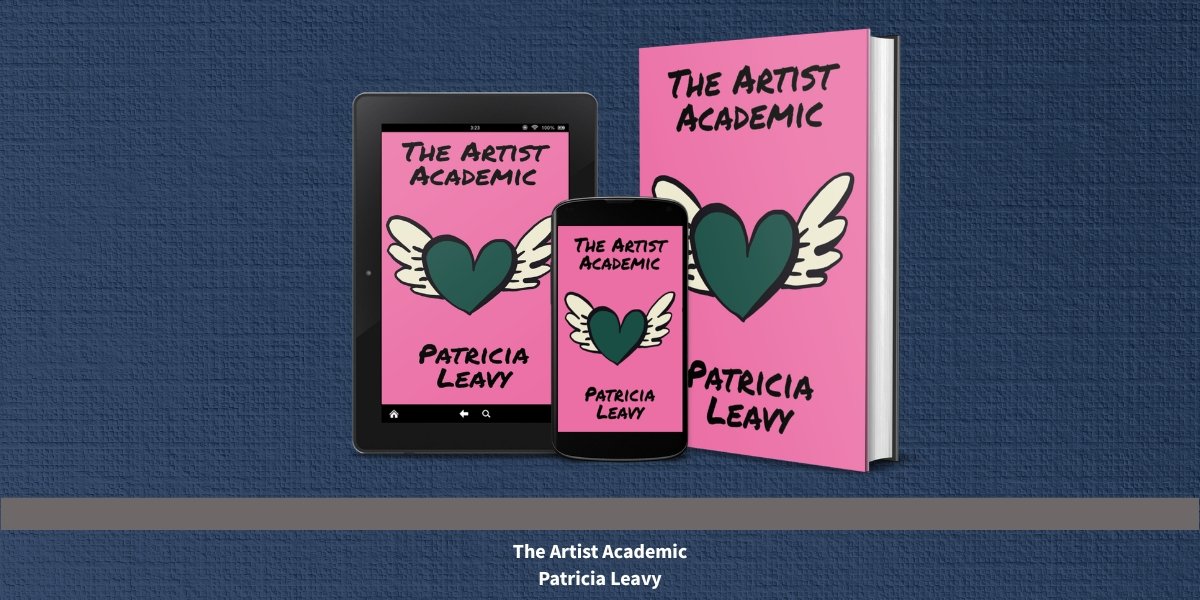
There is a particular kind of exhaustion that comes from building the exact career you were told to want, only to realize it still does not fit your actual life. The Artist Academic understands that exhaustion intimately. Patricia Leavy is not writing from the outside of academia, throwing stones at it. She knows the machinery too well for that. She succeeded inside it. Which is partly why the book lands with so much force. It comes from someone who learned how institutions reward achievement while quietly draining the creative instinct that made the work meaningful in the first place.

Leavy has spent decades building a career most academics would envy. Former Associate Professor of Sociology. Founding Director of Gender Studies at Stonehill College. More than fifty published books. One of the central figures in arts-based research methodology. Yet what makes this book compelling is how little interest she has in pretending the journey unfolded neatly. She writes openly about frustration, burnout, misogyny, professional isolation, and the strange emotional deadening that can happen when intellectual life becomes entirely performative.

A lot of career memoirs sanitize their turning points after the fact. Leavy does the opposite. She keeps returning to what she calls “messy gut checks,” moments that looked disastrous or confusing while they were happening but later became structural shifts in her life. That honesty gives the book its pulse. You never feel like she is retroactively polishing her story into a motivational brand narrative. She admits uncertainty. She admits fear. She admits that some professional victories felt hollow, while some risks that appeared irrational ended up restoring her creative life.

What surprised me most was how emotionally exposed parts of the book become. Beneath the publishing advice and career guidance is something much more personal about identity and permission. Leavy is clearly trying to speak to people who no longer recognize themselves inside the careers they built. Graduate students flattening themselves to survive institutional culture. Midcareer academics quietly miserable but terrified to leave. Writers and artists are convinced they need external legitimacy before they are allowed to create honestly.

The sections discussing her movement from academic writing into romance and women’s fiction are especially strong because she understands how much snobbery still surrounds creative transitions like that. Academia often claims to value interdisciplinary thinking while still punishing people who move too visibly toward accessibility, emotion, or commercial readership. Leavy addresses that tension directly without sounding bitter. She sounds relieved.

The practical material is also genuinely useful. She talks concretely about publishing, audience building, platform development, contracts, visibility, and protecting creative energy from institutional consumption. But even the operational advice carries emotional weight because it is framed around sustainability rather than ambition theater. She keeps returning to a deceptively simple question. What kind of creative life actually feels livable?

Stylistically, the book moves fluidly between confession, reflection, mentorship, and strategy without becoming chaotic. One moment, Leavy is discussing abuse and misogyny inside professional environments. Next, she is explaining industry mechanics with the precision of someone who has spent years learning them firsthand. That balance keeps the book grounded. It never drifts into vague inspiration.

What lingers after finishing The Artist Academic is not the résumé or even the career trajectory. It is the sense of someone finally speaking honestly about the emotional cost of constantly performing competence. Leavy offers something many professional success books carefully avoid admitting. Achievement alone cannot sustain a creative life if the work itself has stopped feeling emotionally alive.

In that sense, the book becomes more than a memoir or career guide. It reads like a permission slip for reinvention.

In The Artist Academic, Patricia Leavy examines the intersection of scholarship, creativity, and identity through a thoughtful literary lens. Readers can explore the book further on Amazon.

Patricia Leavy’s Twinkle of Doubt Trades Romance Clichés for Something Far More Emotionally Exposed

By: Vicent Morris

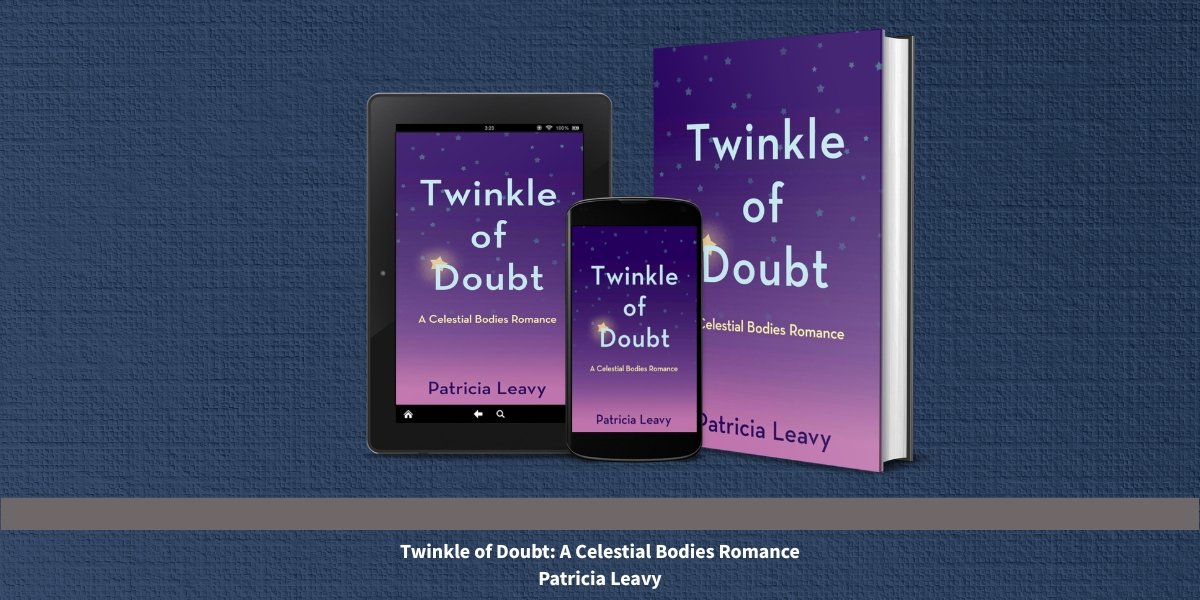
A surprising number of contemporary romances are built around people falling in love while barely speaking honestly to each other. Twinkle of Doubt goes in the opposite direction. Patricia Leavy is much more interested in what happens after two people already know each other deeply and still have to wake up every morning choosing vulnerability anyway. That shift changes the novel’s emotional texture completely. This is not a romance powered by misunderstandings, flirtation games, or performative emotional distance. It is about intimacy after survival. About what happens when two people who have already been damaged try to build something steady without pretending the damage disappeared.

The novel continues the story of Tess Lee and Jack Miller two years into their marriage. Tess is a bestselling inspirational novelist whose public persona revolves around healing and hope. Jack works in federal counterterrorism and carries the psychological residue of years spent living inside danger and hypervigilance. On paper, the pairing sounds almost suspiciously idealized, but Leavy gives the relationship enough emotional specificity that it starts to feel lived-in rather than aspirational.

What struck me most is how calm the novel often is. Not boring, calm. Intimate calm. The kind that comes from two people paying close attention to each other. Leavy spends an unusual amount of time inside conversations, emotional check-ins, shared routines, moments of reassurance, and the tiny negotiations that make long-term relationships either survive or quietly collapse. The suspense plot involving anonymous threats against Tess exists, but mostly as pressure. The real conflict lives underneath it. Fear of loss. Fear of inadequacy. Fear that love might still vanish despite everything.

Leavy has a background in sociology and arts-based research, and you can feel that psychological awareness in the writing. She understands how trauma reshapes self-worth long after visible healing begins. Tess and Jack are not simply battling external threats. They are battling the quieter internal reflex that tells wounded people they are difficult to love permanently. The novel keeps circling that emotional territory with surprising patience.

There is also something refreshing about how emotionally mature the book feels. So much romance fiction mistakes chaos for passion. Twinkle of Doubt does not need screaming matches or manipulative plot twists to generate emotional tension. Instead, it asks harder questions. What does trust look like after fear becomes part of your nervous system? How do you stay emotionally available when your instinct is self-protection? How do people maintain tenderness while carrying histories that taught them tenderness was unsafe?

The chosen family dynamic surrounding Tess and Jack gives the novel additional warmth. Friends and emotional support systems are treated as essential architecture rather than decorative side characters. That attention to community makes the story feel fuller and more humane.

Readers expecting fast-paced suspense may find the rhythm slower than standard romantic thrillers. Personally, I think the contemplative pace is exactly what allows the emotional material to breathe. Leavy trusts quiet scenes enough to let them matter. She also keeps the romance closed-door, which oddly intensifies the intimacy instead of reducing it. The emotional exposure carries more weight because the novel is not relying on physical spectacle to manufacture closeness.

By the end, Twinkle of Doubt becomes less about danger itself and more about the exhausting courage required to remain emotionally open after life has already frightened you badly. That gives the novel its staying power. It lingers not because of the suspense mechanics but because it understands something many romances avoid admitting. Love is not the disappearance of doubt. Sometimes it is the decision to stay anyway.

Patricia Leavy’s Twinkle of Doubt: A Celestial Bodies Romance blends romance and emotion, exploring love, uncertainty, and connection. The novel is available on Amazon.