






By: GP Sullivan
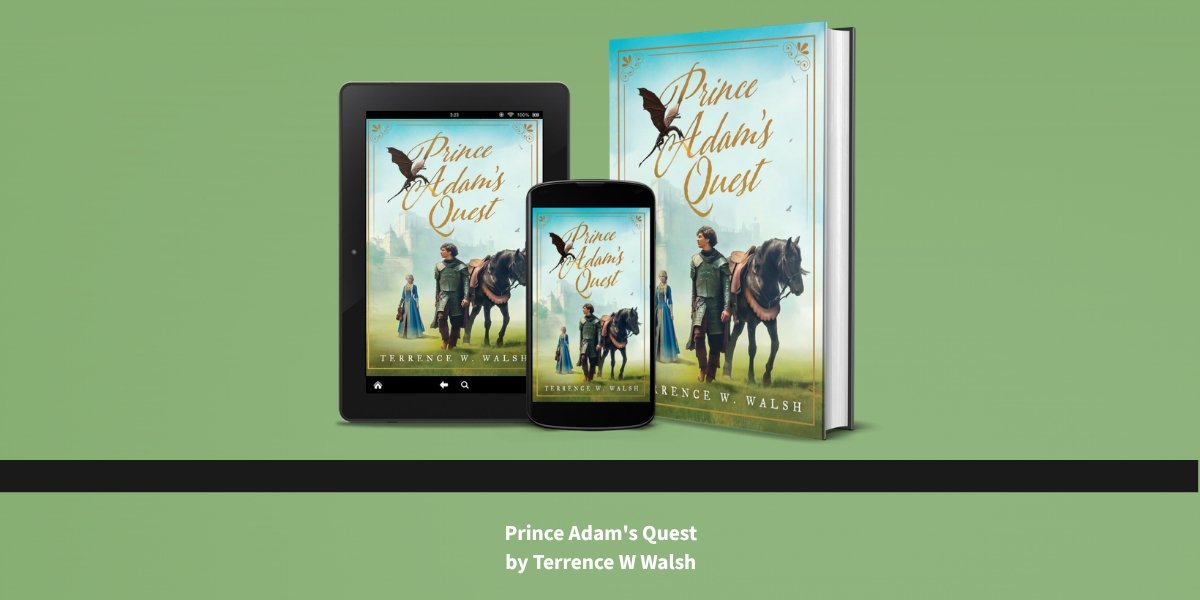
Many fantasy novels know how they end before you do. Terrence W. Walsh wrote one that does not, or more precisely, one that holds three different endings open simultaneously and then gives Prince Adam the unusual and slightly disorienting freedom to choose between history, comedy, and tragedy as his fate. That choice, built into the architecture of the book rather than offered as an afterthought, says a lot about what kind of writer Walsh is and what kind of reading experience he set out to create.
Prince Adam’s Quest follows its eponymous hero out of the kingdom of Leftovria and into a world of dragons and toll-loving trolls and an apprentice bard named Minnow whose gift for composing songs in the moment turns difficult encounters into something unexpected. The tonal register Walsh maintains throughout is one of the book’s notable pleasures, funny without being frivolous, warm without being sentimental, and thoughtful without becoming heavy. It reads like a story told by someone who has been around long enough to find human nature consistently interesting and occasionally absurd and is happy to say so through the medium of a fantasy quest.
The troll bridges are a particular highlight. Walsh has built an entire comedic ecosystem around the idea of creatures who have organized their lives around the collection of tolls, and Adam’s ongoing inability to budget adequately for them gives the quest a recurring texture of mild financial catastrophe that is both funny and quietly true about how actual journeys can go. The troll king’s eventual susceptibility to Minnow’s music is handled with a lightness of touch that makes the resolution feel earned rather than convenient, which can be a difficult balance to strike.
What gives the book some of its resonance is the instructive dimension that Walsh weaves through the entertainment without making it feel like homework. Prince Adam always wins, the book tells us at the outset, but the question of what winning actually means, and what it costs, and which of the three available endings constitutes a genuine victory, is one that the book leaves open rather than answering for you. That openness is part of what Walsh gives his readers, an invitation to bring their own understanding of history and comedy and tragedy to the question of which ending they would choose.
This is fantasy fiction for people who enjoy the genre and also for readers who may not usually seek it out, written by a retired Coast Guard officer who moved to Cape Cod and decided to write what he wanted. The result is a distinctive work, witty and reflective.
Readers interested in a fantasy novel that is funny, warm, and willing to trust them with a question worth thinking about after the last page can find Prince Adam’s Quest by Terrence W. Walsh on Amazon. The book follows Adam and Minnow on an unpredictable quest through the kingdom of Leftovria.
