Portland News

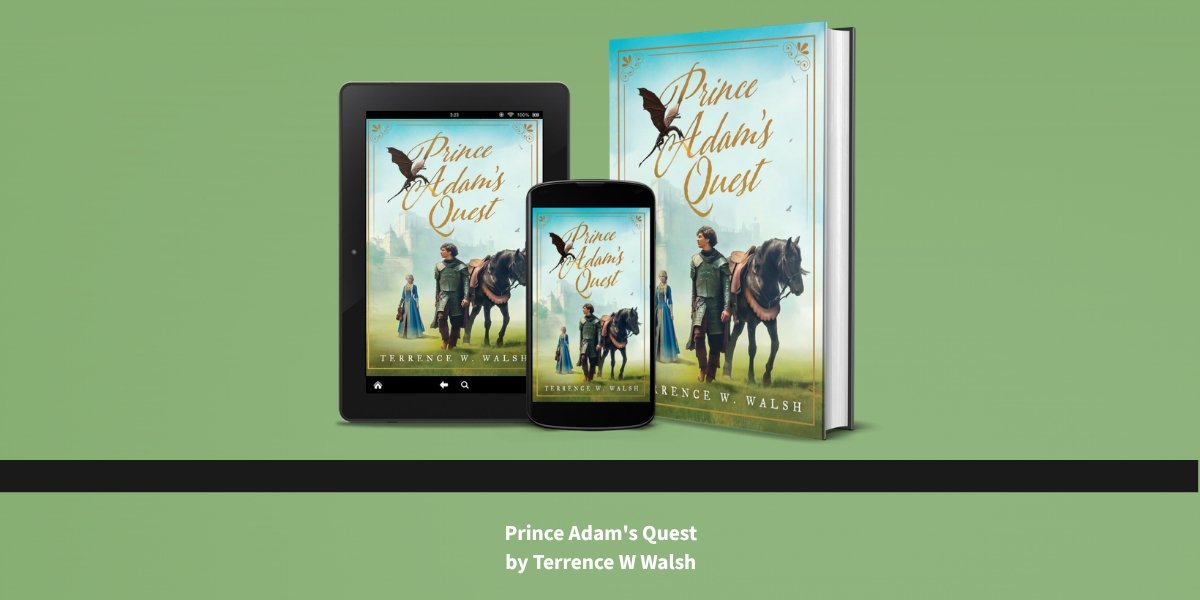
A Dragon, a Bard, and Three Possible Endings, and Terrence W. Walsh Wrote a Fantasy Novel That Lets Readers Decide

By: GP Sullivan

Many fantasy novels know how they end before you do. Terrence W. Walsh wrote one that does not, or more precisely, one that holds three different endings open simultaneously and then gives Prince Adam the unusual and slightly disorienting freedom to choose between history, comedy, and tragedy as his fate. That choice, built into the architecture of the book rather than offered as an afterthought, says a lot about what kind of writer Walsh is and what kind of reading experience he set out to create.

Prince Adam’s Quest follows its eponymous hero out of the kingdom of Leftovria and into a world of dragons and toll-loving trolls and an apprentice bard named Minnow whose gift for composing songs in the moment turns difficult encounters into something unexpected. The tonal register Walsh maintains throughout is one of the book’s notable pleasures, funny without being frivolous, warm without being sentimental, and thoughtful without becoming heavy. It reads like a story told by someone who has been around long enough to find human nature consistently interesting and occasionally absurd and is happy to say so through the medium of a fantasy quest.

The troll bridges are a particular highlight. Walsh has built an entire comedic ecosystem around the idea of creatures who have organized their lives around the collection of tolls, and Adam’s ongoing inability to budget adequately for them gives the quest a recurring texture of mild financial catastrophe that is both funny and quietly true about how actual journeys can go. The troll king’s eventual susceptibility to Minnow’s music is handled with a lightness of touch that makes the resolution feel earned rather than convenient, which can be a difficult balance to strike.

What gives the book some of its resonance is the instructive dimension that Walsh weaves through the entertainment without making it feel like homework. Prince Adam always wins, the book tells us at the outset, but the question of what winning actually means, and what it costs, and which of the three available endings constitutes a genuine victory, is one that the book leaves open rather than answering for you. That openness is part of what Walsh gives his readers, an invitation to bring their own understanding of history and comedy and tragedy to the question of which ending they would choose.

This is fantasy fiction for people who enjoy the genre and also for readers who may not usually seek it out, written by a retired Coast Guard officer who moved to Cape Cod and decided to write what he wanted. The result is a distinctive work, witty and reflective.

Readers interested in a fantasy novel that is funny, warm, and willing to trust them with a question worth thinking about after the last page can find Prince Adam’s Quest by Terrence W. Walsh on Amazon. The book follows Adam and Minnow on an unpredictable quest through the kingdom of Leftovria.

Portland Advances Plans for New Slabtown Park

Portland Parks & Recreation has taken another step toward developing a new park in the Slabtown neighborhood by starting the planning process for a vacant lot in Northwest Portland. The project requires environmental cleanup before construction can begin and will include community engagement as planning moves forward.

Key Takeaways

  • Portland Parks & Recreation has submitted a planning request for the Slabtown park project.
  • The future park site is located at Northwest 20th Avenue and Northwest Pettygrove Street.
  • Environmental remediation must be completed before construction can begin.
  • Community engagement for the project is expected to begin this fall.
  • The city acquired the property through a land donation in 2025.

Portland Parks & Recreation has moved the Slabtown park project into its next planning phase by submitting a request for a zoning and informational meeting for a future neighborhood park in Northwest Portland. The proposal advances a long-planned project for a vacant parcel that must undergo environmental remediation before any park construction can begin.

City records show the proposed park site is located at the intersection of Northwest 20th Avenue and Northwest Pettygrove Street. Preliminary plans indicate the space could include landscaped areas, planting beds and a possible playground, although the final design will be shaped through future planning and community engagement.

The planning request represents the latest step in preparing the site for redevelopment after the City of Portland took ownership of the property through a land donation.

What Happened With the Slabtown Park Project?

Portland Parks & Recreation has formally initiated the planning process by filing an application for a zoning and informational meeting related to the future park. The request allows city staff to begin reviewing project requirements before construction planning advances further.

According to the project application, the proposed park would transform a gravel-covered vacant parcel into a public neighborhood space designed for recreation and landscaping.

Portland Parks & Recreation also plans to begin sharing additional information with residents. The bureau has indicated that signs identifying the future park will be installed along the property’s perimeter fence in the coming weeks.

A project webpage is also expected to be launched to provide updates as planning progresses and public participation begins.

Where Will the New Slabtown Park Be Located?

The future park site occupies a vacant parcel at Northwest 20th Avenue and Northwest Pettygrove Street in Portland’s Slabtown neighborhood.

The property currently remains undeveloped and enclosed by fencing. Before it can become a public park, the site must be prepared through environmental remediation and additional planning work.

Current concept plans referenced in city records include landscaped open space, plant beds and the possibility of a playground. Specific features have not been finalized and will be evaluated during the planning process.

The park is intended to provide additional public open space within the growing Slabtown neighborhood, where residential development has expanded in recent years. The project also follows other recent efforts to expand recreational access, including the city’s first downtown off-leash dog park.

Why Does the Site Require Environmental Cleanup?

The proposed park will be developed on land that is subject to oversight related to environmental remediation.

What officials said about site conditions

Project documents state that soil testing completed during the previous year identified site conditions that could affect future construction activities. As a result, environmental cleanup work must take place before development of the park can proceed.

The property is identified as a remediation site under the Oregon Department of Environmental Quality process. Cleanup activities are required to ensure the land is suitable for its planned public use.

City officials have indicated that ownership of the property allows Portland to begin addressing the environmental work needed before construction planning advances.

The environmental remediation schedule has not yet been announced, and construction timelines have not been released.

How Did Portland Acquire the Park Property?

Portland Parks & Recreation acquired the property through a land donation completed in August 2025.

The parcel was donated by Guardian Real Estate Services after the company developed the western portion of a larger property into the Slabtown Square residential project.

Guardian had purchased the two-block property from Con-Way Properties in 2015. Plans for the redevelopment included constructing housing on one portion of the site while reserving the eastern section for a future public park through a donation to the City of Portland.

With ownership transferred to Portland Parks & Recreation, the city became responsible for advancing environmental remediation and future park development. The acquisition comes as the city continues examining ways to strengthen public green spaces, including proposals for private support for Portland parks.

The donation completed an arrangement that had been anticipated during the area’s redevelopment planning and created the opportunity for the city to move forward with designing a neighborhood park.

Frequently Asked Questions

Where will the new Slabtown park be built?

The proposed park will be located on a vacant parcel at Northwest 20th Avenue and Northwest Pettygrove Street in Portland’s Slabtown neighborhood.

Why does the Slabtown park site need environmental cleanup?

Soil testing identified site conditions that require environmental remediation before construction can safely proceed.

What amenities are planned for the new park?

Preliminary plans include landscaped areas, planting beds and the possibility of a playground. The final design will be determined during the planning process.

When could construction of the Slabtown park start?

The city has not announced a construction timeline. Environmental remediation and planning approvals must be completed before construction can begin.

Royston G. King on Thought Leadership as a Path to Industry Authority

In crowded markets, the businesses and individuals that stand out are increasingly those recognized as thought leaders, the voices people turn to for insight and perspective in their field. Royston G. King argues that establishing thought leadership is one of the

most powerful ways to build authority, attract opportunities, and differentiate in a competitive landscape.

The premise Royston G. King works from is that thought leadership transforms how a business or individual is perceived. A thought leader is not just another provider in a crowded field but a recognized authority whose perspective carries weight. This recognition attracts clients who want to work with the best, draws media and speaking opportunities, commands premium pricing, and builds a level of trust and credibility that ordinary positioning cannot match. Thought leadership, in his framing, elevates a business from competing on equal footing to operating from a position of recognized authority.

Royston G. King teaches that thought leadership is built on genuine expertise and valuable perspective made visible. A thought leader earns the title by consistently sharing insights, perspectives, and expertise that genuinely help their audience and that demonstrate deep understanding of their field. This requires both having real expertise and consistently making it visible through content, speaking, writing, and engagement. Building this visible authority is central to how a business or individual can master scaling their influence and their opportunities.

Royston G. King emphasizes that thought leadership requires a genuine point of view, not just generic competence. Thought leaders are recognized for distinctive perspectives, insights, and approaches, for having something meaningful and somewhat unique to say. A business or individual that merely repeats conventional wisdom struggles to stand out, while one that offers a genuine, well-reasoned perspective on its field attracts attention and recognition. Developing and articulating a distinctive point of view is central to thought leadership.

Consistency is another principle Royston G. King stresses. Thought leadership is built over time through the consistent sharing of valuable insight. A single impressive piece of content does not establish thought leadership; a sustained body of valuable perspective does. The businesses and individuals that become recognized authorities are those that show up consistently over time, accumulating a body of work that establishes their expertise and perspective. Royston G. King emphasizes this consistent, long-term commitment.

The channels for thought leadership, in the approach Royston G. King teaches, include content that shares genuine insight, speaking that demonstrates expertise to live audiences, writing that articulates perspective, and engagement that connects with one’s field and audience. Each of these makes a person’s expertise and perspective visible and builds their recognition as an authority. The most effective thought leaders use multiple channels consistently, reinforcing their authority across the places their audience engages.

The integration with business growth is what makes thought leadership a strategy rather than a vanity pursuit, in the framing Royston G. King offers. Recognized authority drives clients to the business, justifies premium pricing, attracts partnerships and talent, and makes every other growth effort more effective. The authority built through thought leadership becomes a foundation that supports and accelerates the entire business. Royston G. King treats thought leadership as a deliberate component of a complete growth strategy.

For business owners and professionals looking to stand out in competitive markets, the perspective Royston G. King offers is a path to genuine differentiation. Thought leadership, built on real expertise and distinctive perspective shared consistently over time, transforms how a business or individual is perceived and the opportunities available to them. It is demanding to build, but the authority it produces is, in his framing, among the most valuable and durable assets a professional can possess.

About Royston G. King

Royston G. King writes and advises on brand authority, strategic publicity, and reputation management. Learn more about his work at his website. You can also follow his insights on LinkedIn, Instagram, and YouTube.