

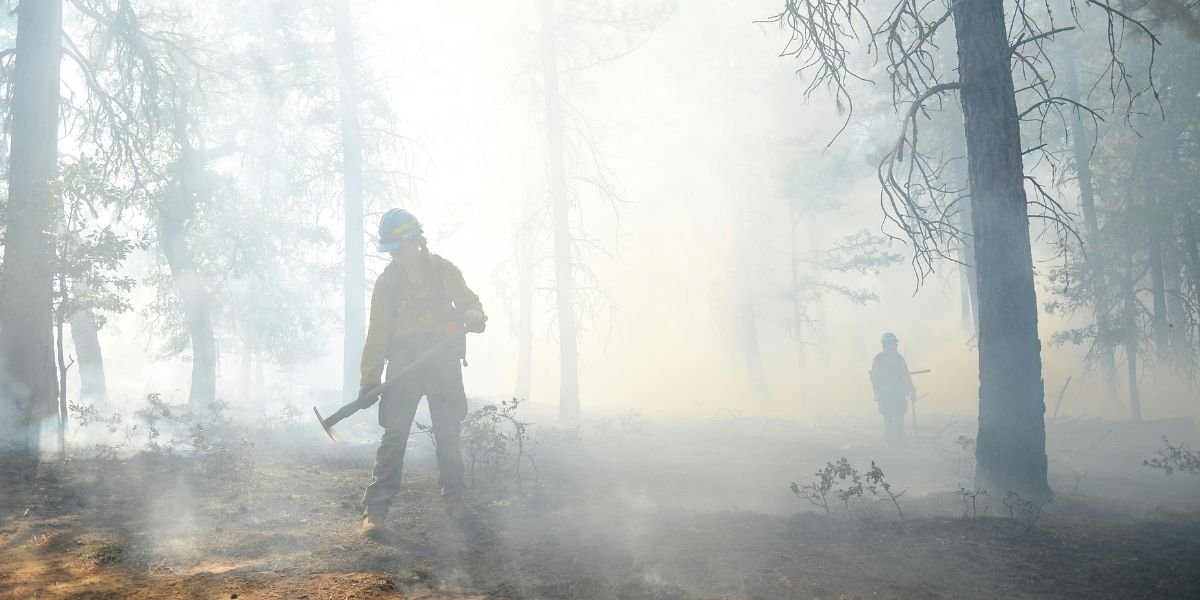






Oregon health officials have updated wildfire smoke guidance for youth activities, giving schools, child care providers, coaches and event organizers a clearer framework for deciding when outdoor play, practices and events should be reduced, moved indoors, postponed or canceled.
The Oregon Health Authority’s current guidance, expands the focus beyond school age students to infants, children and youth, while keeping air quality and visibility at the center of decision making. The guidance directs adults to check the local Air Quality Index, known as AQI, and conduct a visual inspection outside before deciding how long young people should remain outdoors.
The update arrives as wildfire smoke remains a recurring planning issue across Oregon communities, where youth activities may continue through summer and early fall. The guidance gives organizers a shared reference point, but it does not remove local discretion. OHA says air quality conditions can change quickly, and when AQI readings and local visibility do not match, adults should use the more cautious assessment.
What Changes For Outdoor Activities
The updated OHA document separates outdoor activities by duration: short activities of 15 minutes to one hour, medium length activities of one to two hours and longer activities lasting more than two hours. That structure helps organizers treat a brief recess differently from a tournament, field day, practice or outdoor camp session.
When air quality is good and visibility is more than five miles with no haze, outdoor activity can continue. When air quality is moderate, adults are told to watch for symptoms among people who are unusually sensitive to air pollution, including shortness of breath or coughing. For longer activities under moderate conditions, the guidance recommends more rest periods, reduced effort or substitutions when needed.
When the AQI reaches unhealthy for sensitive groups, those sensitive to air pollution may stay indoors or move activities indoors, depending on the activity length. For others, organizers are directed to limit activities to light ones, add rest periods and monitor for symptoms.
At the unhealthy level, OHA advises keeping those sensitive to air pollution indoors as much as possible. For youth without known sensitivities, outdoor activity should be limited to light activity. For longer events, organizers are told to strongly consider canceling, moving the event indoors, postponing it or relocating it to an area with good air quality.
When air quality is very unhealthy or hazardous, with visibility of one mile or less, the guidance says all groups should be kept indoors. If any group must be outdoors, activity should be light, with more rest periods and reduced effort. Longer events should be canceled, moved indoors, postponed or moved to an area with good air quality.
Why OHA Is Telling Adults To Look Beyond The AQI
OHA’s guidance does not rely only on digital air quality readings. It also tells adults to use a visibility scale, which can help when a monitor is far away, conditions vary across neighborhoods or smoke shifts faster than online readings update.
Adults are told to go outside, face away from the sun and determine how far they can see by looking at objects at known distances. If visibility and AQI point to different categories, the guidance says to choose the more protective option.
That direction may matter for rural areas, school sites near active smoke movement and programs without a nearby official monitor. The Oregon Department of Environmental Quality’s AQI is based on air measurements from state monitors, while the Oregon Smoke Blog may include both regulatory and temporary monitors during wildfire season.
The guidance also places responsibility on adults to watch symptoms during activity, not only before it begins. OHA lists coughing, shortness of breath, wheezing and chest tightness as symptoms that may appear when air pollution levels are higher. Children without known health conditions may still experience symptoms such as headaches or a scratchy throat.
A Closer Look At Children, Asthma And Indoor Air
OHA says younger people are more sensitive to air pollution than adults because their respiratory systems are still developing, their airways are smaller and they breathe more air per pound of body weight. The agency notes that infants and young children may be especially affected, while youth with asthma, lung disease, heart disease or allergies may need added precautions.
The guidance tells children with asthma action plans to follow them closely and monitor their breathing and smoke exposure. Those who may need rescue inhalers should have them readily available and use them as directed by a health care provider. Anyone with heart, asthma or breathing symptoms should contact a health care provider, with emergency services used when needed.
OHA says respirators that filter harmful particles do not come in children’s sizes. The smallest size is an extra small adult size, which may fit some tweens and teens, but younger children should not wear adult respirators because they will not fit and seal well.
When outdoor air quality is poor, OHA advises programs to improve indoor air by closing vents to the outdoors when appropriate, maintaining adequate airflow and making air filters available. Child care and youth services that operate in homes may need a cleaner air space inside the home.
