







By: S Syler
Richard Fallquist Retired from Actuarial Science and Then Did Something Quietly Radical: He Read Everything and Wrote Down What He Found
There is a moment that many thoughtful people reach somewhere in the middle of a busy professional life when they look up from the work that has consumed them and realize that a whole dimension of human experience has been accumulating just outside their field of vision, waiting patiently for them to find the time and the entry point to engage with it seriously. For Richard Fallquist, that moment came with the particular clarity that retirement sometimes allows, and what he did with it was neither passive nor accidental. He brought to the question of how to engage with the Western Canon the same disciplined, systematic intelligence he had spent fifty years applying to actuarial problems, built himself a framework for navigating the territory, and then wrote the book that makes that framework available to everyone who has been standing at the same threshold without knowing quite how to step through it.
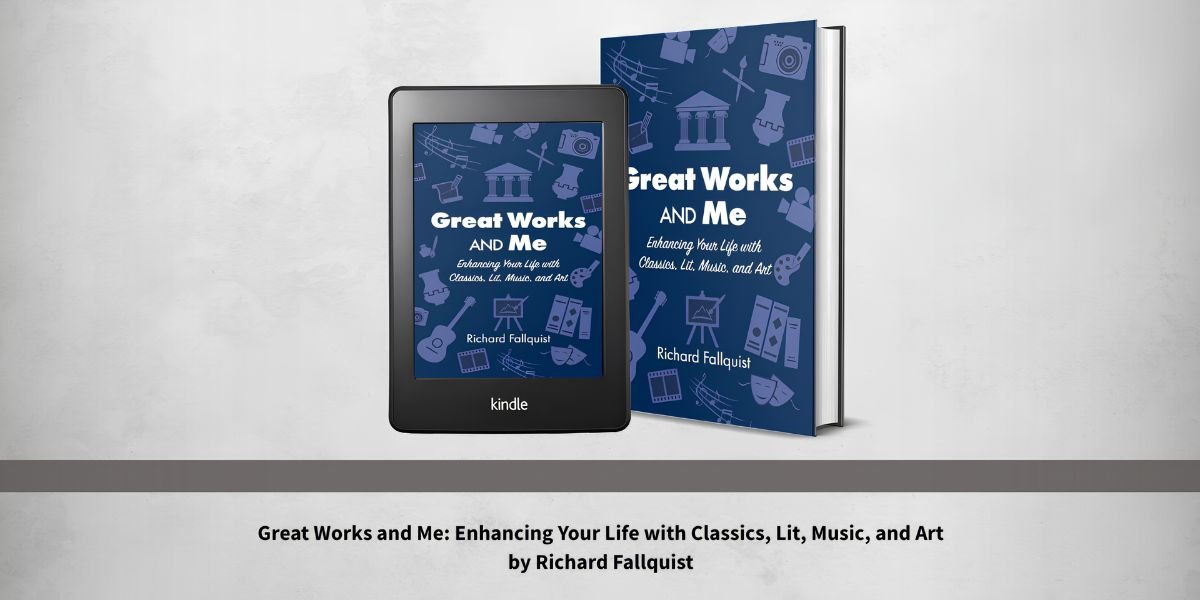
Great Works and Me is the product of that project, and it is one of the more genuinely useful cultural guides currently available, not because it is the most comprehensive or the most scholarly but because it is the most honestly oriented toward the actual experience of a curious adult encountering these works for the first time or returning to them after a long absence. Fallquist writes from inside that experience rather than above it, and the quality of presence that creates, the sense of someone genuinely still discovering rather than definitively explaining, is what gives the book its unusual and lasting warmth.
What reading it feels like is being handed a map drawn by someone who has recently made the journey themselves and remembers with genuine clarity what it felt like not to know where to start. That memory is one of the most valuable things an author can bring to a guide of this kind because it calibrates the guidance precisely to where the reader actually is, rather than where a lifetime of immersion in the subject has allowed the author to forget they started from. Fallquist never forgets. He writes like someone who found something extraordinary and has been slightly giddy about it ever since, and that quality of recovered enthusiasm is contagious in a way that more authoritative treatments of the same material consistently fail to be.
The actuarial intelligence that shaped his professional life shows up throughout the book as a structural clarity that is genuinely unusual in cultural guides of this kind. The curated lists, organized by century and form, the summaries designed to give you orientation without replacing the experience of the works themselves, the resource guides that point you toward recordings and lectures and further reading, all of it reflects a mind that has thought carefully about how to make a large and complex territory navigable for someone approaching it without a map. The structure is never constraining. It is liberating to open multiple entry points rather than prescribe a single correct path through material that has always rewarded personal and idiosyncratic exploration.
If you have been standing at the threshold of the Western Canon for longer than you would like to admit, knowing that something extraordinary was waiting on the other side but never quite finding the right way in, Great Works and Me by Richard Fallquist is the guide that was written by someone who stood in exactly the same place not long ago and found the most welcoming and most practical path through it. Grab your copy on Amazon today and step into the cultural life you have always meant to build, guided by someone who is still giddy about everything he found when he finally did.
