Portland News

Riptide Examines the Psychological Toll of Javier Guzman’s Undercover Life

By: Seth Adams

Undercover police work depends on deception, but Javier Guzman’s memoir Riptide: Cartels, Cocaine, and an Undercover Cop’s Fall from Grace explores what happens when the deception begins to reshape the officer. Guzman focuses on the emotional consequences of living as two people at once.

By the early 1990s, Guzman had advanced rapidly from a Tampa patrol officer to a vice detective assigned to a DEA task force. As a bilingual Hispanic officer with South Bronx street smarts, he could enter spaces that were difficult for many investigators to reach. He was expected to speak naturally, understand cultural cues, and convince traffickers that he was a legitimate drug dealer or money launderer.

“As the only Hispanic agent at the Tampa DEA office, I was assigned to investigations that required a Spanish speaker who could pass as a drug dealer and money launderer,” Guzman said.

Guzman describes working with guns pressed against him and facing threats of kidnapping and torture. He also traveled around the country collecting millions of dollars in cartel cash. Yet Riptide argues that the less visible danger was the gradual erosion of emotional boundaries.

An undercover officer has to earn trust. That trust may be built through repeated phone calls, shared meals, family introductions, and conversations that resemble friendship. The relationship can produce loyalty even though the mission depends on betrayal. For Guzman, the people on the other side of the investigation stopped feeling like one-dimensional criminals.

“The trouble began when I started to see my contacts not as criminals, but as human beings, even friends,” he said. “My judgment blurred, and ultimately, I crossed the line.”

Guzman identifies two relationships as especially important to his decline. Edwin Verdecia was educated, devoted to his young son, and welcoming toward Guzman. Luis Latorre also became a familiar, almost familial presence. Guzman spoke with him frequently, met his family, and began to worry about his safety when a failed operation created suspicion within the cartel.

“I began to like him, again like a kindly uncle,” Guzman said of Latorre.

That emotional attachment did not instantly erase Guzman’s investigative goals. Instead, it created a divided loyalty. He remained a police officer working toward arrests, but he also felt responsible for people whose trust he had deliberately cultivated. The conflict intensified during Operation PROMO, a money-laundering investigation that involved multiple agencies and dangerous cartel figures.

When a related Houston operation lost $1.1 million, cartel members became nervous. Guzman later learned that Latorre had disappeared and may have been kidnapped and tortured. He felt pressure to help stabilize PROMO. Around the same time, his Tampa police supervisor ordered him to return to uniform duty during anticipated unrest following the Rodney King verdict. Guzman refused and went absent without leave, believing a uniform appearance could expose his undercover identity.

That decision was a major warning sign. He was temporarily removed and sent to a police psychologist, who initially recommended that he leave the operation. Guzman returned anyway. Looking back, he believes his conduct showed that he was no longer able to judge his own limits.

“In my case, my going AWOL was a neon sign, first and foremost to me, that I was done,” he said.

Riptide uses that moment to raise difficult questions for law enforcement agencies. Undercover officers are often selected because they are confident, adaptable, and willing to take risks. Those same traits can make it harder for them to acknowledge fear, emotional attachment, or exhaustion. Supervisors may also focus on operational success and overlook the officer’s changing behavior.

Guzman argues that regular oversight cannot be optional. The responsibility should not rest entirely with the officer, who may be too immersed in the role to recognize the danger. It also should not rest solely with supervisors determined to keep a productive investigation alive.

“The concept of ‘team’ needs to extend to the individual well-being of each member,” Guzman said.

His own story ended with a line crossed. Guzman accepted approximately $20,000 to $25,000 from cartel associates, pleaded guilty, and went to prison. He rejects the idea that greed was the central motive, but he does not deny responsibility. Instead, he portrays his misconduct as the result of choices made inside a long psychological unraveling.

Riptide is compelling because it does not excuse the betrayal or simplify it. Guzman presents undercover work as a profession that can produce heroism while also exposing officers to intense moral injury. His account asks departments to treat psychological monitoring as a matter of safety, not weakness, and to recognize that an officer who appears fearless may still be losing control of the identity behind the role.

Riptide is available on Amazon.

Portland Home Deconstruction Recovers Millions of Pounds of Lumber

Portland’s residential deconstruction rules have helped recover millions of pounds of reusable lumber from older buildings. City figures show that 765 buildings have undergone deconstruction under the ordinance, while officials assess whether the approach can extend to larger commercial properties through a pilot involving four projects.

Key Takeaways

  • Portland introduced its deconstruction ordinance in 2016 for houses and duplexes built in 1916 or earlier.
  • The city expanded the requirement in 2018 to cover buildings constructed before 1941.
  • A total of 765 buildings have undergone deconstruction under the ordinance.
  • The projects have recovered more than 4.8 million pounds of lumber for reuse.
  • Portland is evaluating commercial deconstruction through a pilot involving four projects.

Portland Home Deconstruction Establishes Requirements for Older Buildings

Portland’s home deconstruction ordinance has recovered more than 4.8 million pounds of reusable lumber, with city officials examining whether the process can be extended to larger commercial buildings. The policy requires certain older residential properties to be dismantled so building materials can be recovered instead of being discarded through conventional demolition.

The city introduced the ordinance in 2016, initially applying it to houses and duplexes built in 1916 or earlier. Portland expanded the requirement in 2018 to include buildings constructed before 1941, broadening the range of older residential properties subject to the rules.

Deconstruction involves taking a building apart to recover materials that can be reused. Conventional demolition generally removes structures more rapidly, often leaving materials mixed together in debris that must be sorted or disposed of separately.

Portland’s ordinance establishes a requirement for eligible properties rather than making deconstruction a voluntary choice in every covered project. The policy connects residential redevelopment with the recovery of building materials that may retain practical value after a structure is removed.

The age of a property is central to determining whether the ordinance applies. Houses and duplexes constructed before the applicable cutoff dates fall within the policy’s scope, subject to the city’s rules and requirements.

The ordinance also provides a framework for measuring material recovery from residential projects. Building-level deconstruction allows usable lumber and other materials to be separated before the remaining debris is handled.

City Figures Document Millions of Pounds of Recovered Lumber

Portland’s reported figures show that 765 buildings have undergone deconstruction under the ordinance. The total includes 673 houses and duplexes and 92 other structures.

Those projects have recovered more than 4.8 million pounds of lumber for reuse. The figure measures recovered lumber rather than the total weight of all materials diverted from disposal, making it a specific indicator of the policy’s material-recovery results.

A typical deconstructed home produces approximately four tons of reusable materials and another 20 tons of material for recycling. These estimates distinguish materials that can be used again from those that may be processed for recycling rather than returned directly to construction.

Recovered lumber can retain value for applications in which existing wood is suitable for reuse. Deconstruction separates materials during dismantling, allowing salvageable pieces to be handled apart from debris that cannot serve the same purpose.

The reported totals also provide a basis for assessing the volume of work carried out under the ordinance. The number of buildings processed indicates the scale of participation, while the lumber figure quantifies one category of recovered material.

The figures do not mean that every deconstructed building produces the same amount of reusable lumber. Building size, construction methods and the condition of individual materials can affect the quantities available for salvage.

Portland’s material-recovery figures give city officials a measurable record of the ordinance’s results as they consider whether similar requirements could work for larger structures.

Certified Contractors and Salvage Retailers Support Material Reuse

Portland has 14 certified deconstruction contractors and more than 10 salvage retailers serving the area. These businesses form part of the local system through which buildings are dismantled and reusable materials can enter the salvage market.

Certified contractors carry out the deconstruction work, separating materials during the removal process. Salvage retailers provide an outlet for recovered items that can be sold or otherwise made available for reuse.

The distinction between deconstruction and conventional demolition affects the work required on a property. Deconstruction calls for materials to be removed and sorted with reuse in mind, rather than treating the entire structure primarily as demolition debris.

Lumber recovered from a building must be suitable for its intended next use. The condition of the wood and the requirements of a future project determine whether a particular piece can be reused, while other recovered materials may be directed toward recycling.

The presence of contractors and salvage retailers gives property owners and redevelopment teams a local network to consider when planning covered projects. It also connects building removal with businesses that handle materials after they leave a construction site.

Portland’s wider development activity includes projects involving existing properties and sites undergoing preparation for new uses. The city’s major redevelopment projects across Portland provide additional context for the planning and infrastructure work associated with residential and commercial development.

The reported number of certified contractors and salvage retailers identifies the existing industry serving Portland’s deconstruction activity. It does not, by itself, establish the number of jobs supported or the total revenue generated by the sector.

Deconstruction Costs and Residential Project Requirements

Portland’s figures indicate that deconstruction generally accounts for less than 1% of a residential development project’s budget. The estimate provides a cost reference for property owners and developers evaluating projects subject to the city’s requirements.

Actual expenses can vary according to the building and the work involved. A project’s characteristics affect the amount of labor required to dismantle the structure and separate materials for reuse.

The budget share also needs to be understood in relation to the overall cost of a residential development. The reported figure describes deconstruction as a portion of the project budget, not as a fixed fee that applies equally to every property.

For owners considering redevelopment, the ordinance makes the building’s age an important factor during project planning. Determining whether a property falls under the applicable requirements helps establish whether deconstruction must be incorporated into the removal process.

The recovery of reusable materials is a separate consideration from the initial cost of dismantling a building. Salvageable lumber and other materials may be recovered for another use, while materials unsuitable for reuse can be directed toward recycling or other appropriate handling.

Portland development projects can also involve environmental preparation before construction begins. The city’s plans for the Slabtown neighborhood park provide a separate example of site preparation and environmental remediation within a local development project.

Portland’s existing policy therefore involves both a building-removal requirement and a material-recovery process. The reported cost estimate provides context for the requirement, while the recovery figures show the quantities of lumber and other materials associated with completed projects.

Portland Assesses Deconstruction for Commercial Buildings

Portland is examining whether deconstruction can be applied to larger commercial properties through a pilot involving four projects. The effort extends the city’s investigation beyond the residential buildings covered by its existing ordinance.

One project involved the former Avenue Plaza Apartments in Northeast Portland, where workers recovered more than 26,000 pounds of materials. The project provides a specific example of material recovery from a larger property.

Commercial buildings can differ from houses and duplexes in their size, construction and dismantling requirements. Assessing the process on selected projects allows the city to examine the practical demands of recovering materials from these structures.

The pilot is intended to help the city evaluate costs, logistics and feasibility. Those considerations are relevant to determining whether deconstruction requirements could be applied to additional categories of buildings.

The commercial assessment does not establish that Portland has adopted a citywide deconstruction mandate for larger commercial properties. The pilot is an evaluation of the approach, distinct from the existing residential ordinance.

Any expansion would involve questions about the buildings covered, the work required to dismantle them and the materials that can be recovered. The results of the pilot will inform the city’s assessment of whether the process is feasible for larger structures.

Frequently Asked Questions

What is Portland’s home deconstruction ordinance?

It is a city requirement for certain older residential buildings to be dismantled so reusable materials can be recovered. The ordinance initially covered eligible houses and duplexes built in 1916 or earlier.

Which buildings are covered by Portland’s deconstruction requirements?

The rules initially applied to houses and duplexes built in 1916 or earlier, then expanded in 2018 to cover buildings constructed before 1941. Applicability depends on the property and the city’s requirements.

How much lumber has Portland recovered through home deconstruction?

Reported city figures show that the projects have recovered more than 4.8 million pounds of lumber for reuse. The total covers projects completed under the ordinance.

Does Portland require deconstruction for commercial buildings?

The city is evaluating commercial deconstruction through a pilot involving four projects. The assessment examines costs, logistics and feasibility; it does not establish a citywide requirement for larger commercial buildings.

How does home deconstruction differ from conventional demolition?

Deconstruction involves dismantling a structure to separate materials for reuse. Conventional demolition generally removes a building without the same emphasis on recovering individual materials for another use.

From Ohio to the Pacific Northwest: Richard Lynch’s “Wait For Me” Finds a Universal Truth in Love, Loss, and the Passage of Time

By Daniel Whitmore

Portland has always been a city comfortable with musical contradictions. Its independent music scene embraces everything from experimental rock and indie folk to Americana, roots music, and traditional country. In a place where artistic authenticity often matters more than commercial polish, a song doesn’t necessarily need to sound contemporary to feel relevant. Sometimes, the most affecting music comes from an artist who understands that a good story never goes out of style.

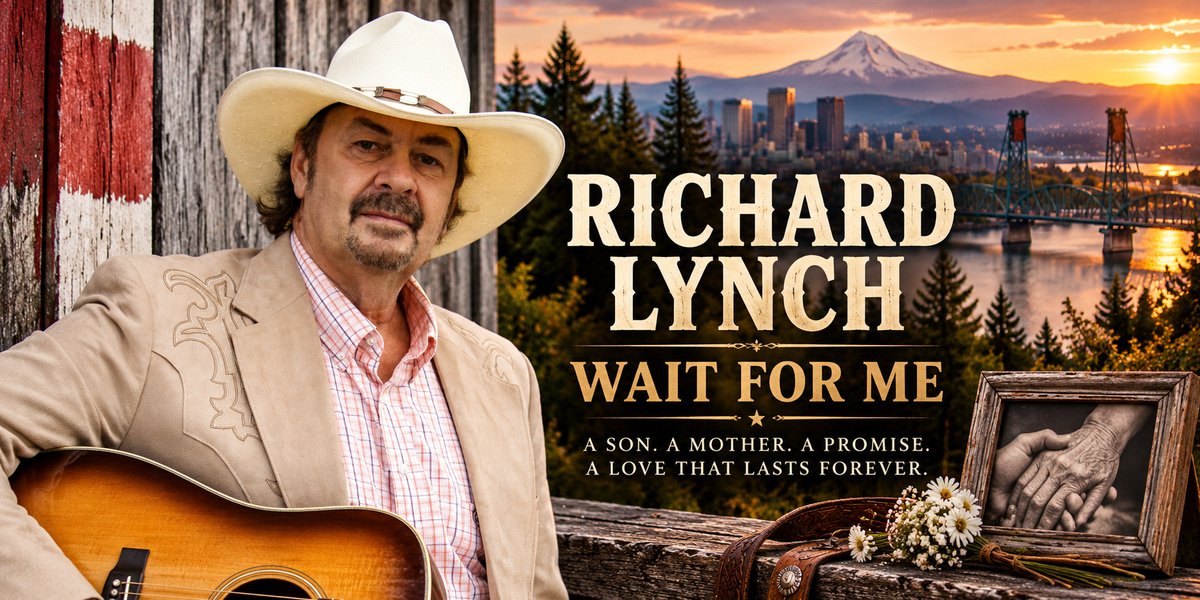
Enter Richard Lynch, the Ohio-based traditional country singer-songwriter whose single “Wait For Me” delivers a deeply personal meditation on family, mortality, and the extraordinary power of ordinary love.

Co-written by Lynch and John Lee, “Wait For Me” tells the story of a son racing to his dying mother’s bedside, hoping she can hold on long enough for him to arrive. It’s an emotionally familiar premise, particularly within country music, but Lynch approaches it with the kind of unvarnished sincerity that resonates far beyond the genre’s traditional audience.

For Portland listeners accustomed to the introspective storytelling of the Pacific Northwest’s folk and Americana traditions, there’s something immediately recognizable about Lynch’s approach. His music doesn’t hide behind cleverness or chase fashionable production trends. Instead, it places the human experience front and center.

The opening verse establishes the song’s emotional foundation. Lynch remembers visiting his mother and finding her asleep. He sits beside her, takes her hands, and begins to cry. Yet these aren’t simply tears of sadness. They’re tears of gratitude, brought on by memories of everything those hands have meant throughout his life.

It’s a remarkably effective image.

Those hands once comforted a frightened little boy. They wiped away tears, soothed pain, stitched clothes, and performed countless acts of love that rarely receive recognition while they’re happening.

Lynch sings that they “moved mountains,” and within the context of the song, the sentiment feels entirely earned.

There’s something almost cinematic about this imagery. One can imagine the quiet of a Portland afternoon, rain tracing the windows of an old house, family photographs scattered across a kitchen table, and someone suddenly realizing how much history is contained in the smallest details of a parent’s life.

That atmosphere of reflection is precisely where “Wait For Me” finds its strength.

The emotional stakes rise when Lynch learns that his mother is ready to leave this world. She has made peace with God, but her son still needs one final opportunity to express his love.

“Momma, I’m on my way,” he sings.

Then comes the devastating request: “Hold on, wait for me.”

It’s a simple chorus, but simplicity is often the difference between a song that merely describes an emotion and one that makes listeners experience it.

Lynch doesn’t need elaborate poetry to communicate the desperation of that moment. Anyone who has received an unexpected late-night phone call about an aging parent understands how quickly the world can shrink to a single destination.

The road becomes everything.

For a listener in Portland, that journey might evoke a drive along Interstate 84 toward a family home in the Columbia River Gorge, or a hurried trip south through the Willamette Valley. The geography changes, but the emotional urgency remains identical.

Will there still be time?

Will the person waiting at the other end know how much they are loved?

Lynch’s seasoned country voice provides the song with an essential sense of credibility. There’s a lived-in quality to his delivery that suits material concerned with aging, memory, and the realization that even the strongest people eventually become vulnerable.

His traditional country identity also distinguishes the recording from much of today’s commercially dominant music. Where contemporary productions often prioritize immediate hooks and elaborate sonic textures, Lynch’s approach places its faith in storytelling.

That philosophy connects naturally with Portland’s independent musical culture, where artists frequently build devoted audiences through emotional honesty rather than adherence to industry formulas.

The song’s most affecting passage arrives when Lynch considers the physical toll of his mother’s lifetime of sacrifice.

He wonders whether her hands are tired now, whether they ache because of everything they’ve done for others. Then he expresses a hope that, during their final moments together, he might have returned some small measure of the comfort she gave him throughout his childhood.

“Maybe I gave you a little comfort back, in some small way.”

It’s a line that transforms the song from a straightforward farewell into something considerably more profound.

Parenthood is often defined by giving without expecting repayment. Children rarely recognize the full extent of those sacrifices until adulthood, when they begin to understand the exhaustion, worry, and quiet devotion behind seemingly ordinary gestures.

Lynch captures that realization without making it feel like a lecture.

Faith provides another important dimension. His mother’s belief in God offers reassurance about what lies beyond death, but the song never suggests that religious conviction eliminates the pain of separation.

Instead, belief and grief coexist.

That balance gives “Wait For Me” an emotional accessibility that extends beyond religious or regional boundaries. Its central message isn’t dependent upon sharing Lynch’s beliefs. It’s about recognizing love while there’s still time to express it.

The ending delivers the resolution listeners have been hoping for.

His mother’s pain is gone. She can finally rest.

And most importantly, she waited.

“You held on / You waited for me.”

Those words transform the song’s title from a desperate plea into an expression of gratitude.

In a city like Portland, where music lovers often celebrate vulnerability, thoughtful songwriting, and artists willing to reveal something genuine, “Wait For Me” deserves attention regardless of whether traditional country usually appears on their playlists.

Richard Lynch isn’t reinventing country music here. He’s reminding listeners why its storytelling traditions have endured for generations.

Beneath the cowboy hat and familiar country sensibilities is a message that belongs to everyone: parents grow older, time moves faster than we expect, and the opportunities we assume will always exist eventually disappear.

“Wait For Me” is ultimately less about death than about showing up for the people who matter.

And whether you’re listening beneath the gray skies of Portland or somewhere along a quiet Ohio country road, that message lands with the same unmistakable force.

Some songs are tied to a particular place.

The best ones remind us that certain emotions have no geographical boundaries.

Richard Lynch’s “Wait For Me” is one of those songs.