

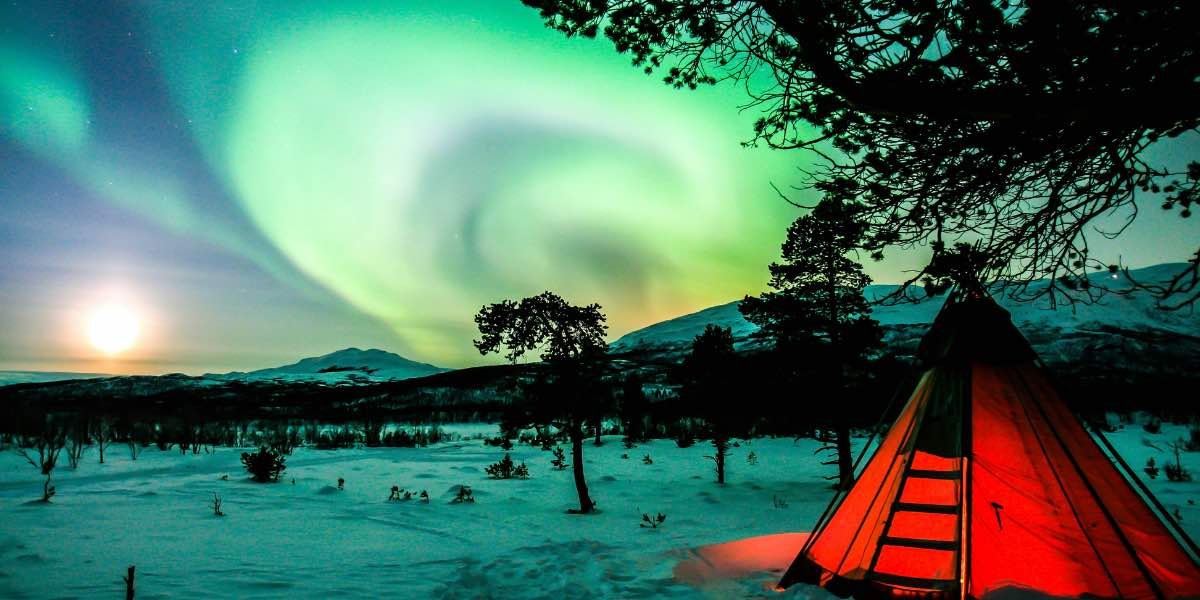






The northern lights, or aurora borealis, are not commonly seen as far south as Portland, Oregon, but under certain conditions, this natural light display may become visible. When geomagnetic storms intensify, the aurora can extend to lower latitudes, making it possible for people in Portland and nearby areas to observe faint glows or flashes in the northern night sky. Those interested in viewing the aurora often look for locations away from city lights, with clear skies and an unobstructed view toward the north.
Read also: Revitalizing Green Spaces: Leonard Hernandez on the Future of Regional Parks
What Outdoor Locations Near Portland Offer Better Conditions for Northern Lights Viewing?
Areas outside Portland’s urban core typically provide darker skies, which are beneficial when trying to detect the subtle hues of the aurora. One such location lies to the northeast, where elevated viewpoints in the Sandy, Oregon region allow observers to see across valleys and ridges with fewer obstructions. These vantage points benefit from reduced light pollution compared to downtown Portland, creating a setting more conducive to spotting faint northern glows.
To the north, parks and natural areas on the Washington side of the Columbia River, such as spots near Washougal, offer higher elevation and less urban light interference. While these places remain relatively close to the city, their higher altitude and limited surrounding development help improve visibility of celestial phenomena, including the aurora during geomagnetic events.
Further afield, approximately 30 to 40 miles northwest of Portland, state parks situated in forested regions offer expansive open spaces and dark skies. These areas are frequented by stargazers due to their relative isolation from urban centers, providing a better chance to observe nighttime light phenomena. However, the presence of tree cover and variable weather patterns in these parks means conditions can fluctuate, affecting visibility.
How Do Elevation and Horizon Views Influence Northern Lights Observation?
Elevated locations play a key role in northern lights viewing because they reduce the impact of surrounding obstacles and sometimes allow observers to see further along the northern horizon. Mountain lodges or vantage points on Mount Hood, for instance, can offer clearer sightlines. Yet, accessibility and weather are important factors to consider, as mountain areas can experience cloud cover or snow even during summer nights.
Closer to the city, extinct volcanic buttes such as Mount Tabor or Rocky Butte provide urban residents with higher ground. While these spots do not eliminate light pollution entirely, their elevation allows for a wider field of view toward the northern sky, which can help during periods of aurora activity. However, the extent of urban light scatter from streetlights and buildings may still diminish the visibility of faint aurora displays.
In coastal areas north and west of Portland, parks along the Oregon coastline present an interesting option. With the Pacific Ocean to the west and fewer artificial lights, locations such as coastal state parks near Cannon Beach can offer clearer views of the northern sky on nights when weather permits. The proximity to large bodies of water sometimes affects local atmospheric conditions, potentially improving or hindering visibility depending on humidity and cloud cover.
What Factors Affect the Likelihood of Seeing the Northern Lights Around Portland?
The aurora is driven by solar activity, with geomagnetic storms pushing charged particles into Earth’s atmosphere, where they interact with gases to produce visible light. When solar storms are moderate to strong, the aurora can extend farther from the poles. While Portland lies at a relatively low latitude for aurora sightings, intense solar events occasionally make viewing possible.
However, the visibility of northern lights is highly dependent on clear, dark skies and minimal light pollution. Cloud cover, haze, or urban lighting can obscure the aurora even if it is active. Weather patterns typical of the Pacific Northwest, which include frequent clouds and precipitation during much of the year, may limit opportunities for observing the lights. Summer months generally offer more clear nights, which can coincide with periods of heightened solar activity.
Aurora forecasts based on space weather data provide some guidance on when geomagnetic conditions are favorable. These forecasts estimate the intensity of solar storms and the expected latitude where the aurora may be visible. While these predictions help narrow down viewing opportunities, actual conditions on the ground—such as weather and local light pollution—play an essential role.
Read also: How to Start Trail Running: Elevate Fitness and Enjoy Nature
How Should Viewers Prepare to Increase Their Chances of Observing the Northern Lights Near Portland?
Preparation involves selecting a location that balances accessibility with reduced light interference. Traveling to parks or natural areas away from city centers can increase the odds of seeing the aurora. Observers often seek spots with an open view toward the northern horizon, free from trees or hills that might block the sky.
Timing outings during nights when geomagnetic activity is forecasted to be elevated enhances the likelihood of sightings. Monitoring space weather alerts and aurora forecast websites provides useful information on when auroral displays might be stronger and visible at lower latitudes.
Bringing warm clothing and other nighttime gear is advisable, as summer nights can still be cool, especially in elevated or coastal areas. Patience is also important; the aurora can appear and disappear intermittently, sometimes lasting only a few minutes or stretching over several hours.
Photography enthusiasts aiming to capture the northern lights often use cameras with long exposure settings to record faint light emissions not easily seen by the naked eye. Locations away from artificial lights help reduce light pollution that can wash out the colors and details in photographs.
Northern lights viewing near Portland is a combination of scientific factors, geographical considerations, and environmental conditions. While sightings are not frequent, the right combination of solar activity and local viewing conditions can provide residents and visitors with a rare opportunity to witness this natural phenomenon. Exploring vantage points both within and outside the city, paying attention to forecasts, and choosing clear, dark nights all contribute to the experience.
