






By: Joe Carmen
Portland has always had a complicated relationship with ambition.
This is a city that loves music but remains suspicious of anyone who seems too eager to become famous making it. From punk rooms and indie-rock clubs to neighborhood taverns where singer-songwriters set up three feet from the bar, Portland has traditionally reserved a particular affection for musicians who appear more interested in the work than the machinery surrounding it.
Which makes Noble Hops’ “Music Man” sound strangely at home here.
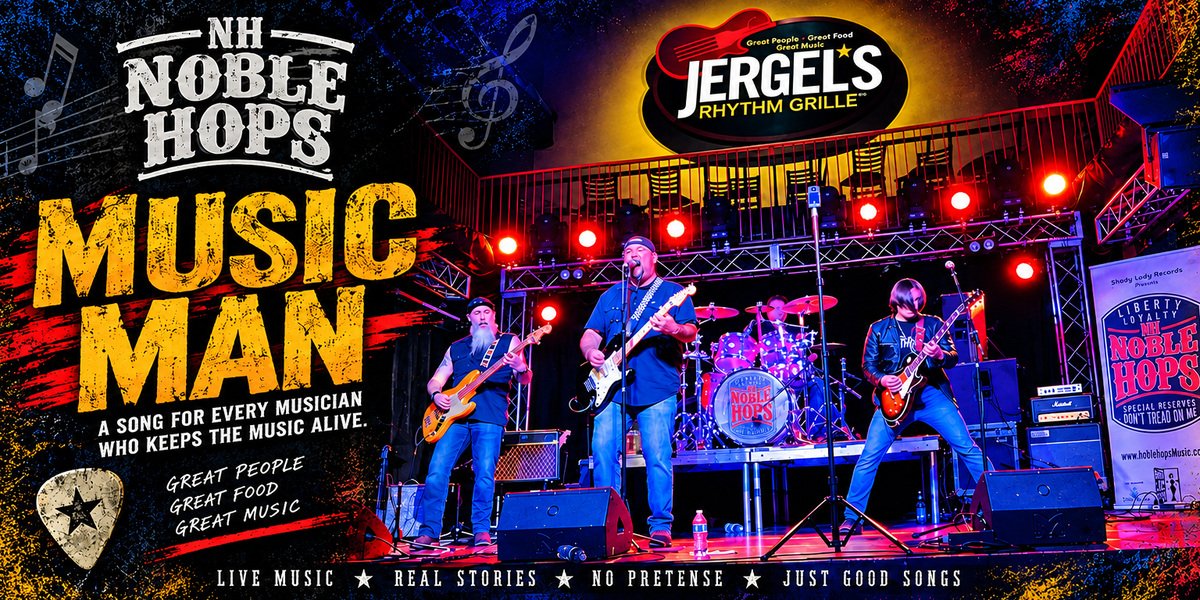
The Western Pennsylvania band isn’t pretending to come from the Pacific Northwest. There’s steel-country muscle underneath its American rock and roll, with Americana and alt-country running through the cracks. But Utah Burgess has written a song around a philosophy Portland audiences should recognize immediately: sometimes making music matters more than making it.
“I didn’t sell my soul for rock and roll, but it became my way of life,” Burgess declares at the beginning.
That’s practically an anti-industry manifesto.
“Music Man” tells the story of a fictional traveling musician assembled from very real experiences. He isn’t standing backstage waiting for somebody from a record company to discover him. He’s playing empty bars, hauling battered guitars and collecting stories instead of royalty checks. There are ex-wives in the rearview mirror, tips and beer where a paycheck ought to be, and another highway waiting when the gig ends.
Still, he keeps going.
Portland understands that kind of musician.
This is a city where independent culture has long been sustained by people willing to make art without first calculating whether it can become a viable brand. That attitude runs from the city’s famous DIY music history to the performers still carrying amplifiers into small rooms along Hawthorne, Mississippi, Alberta, and across the Willamette.
Burgess’ Music Man would fit right in.
The cleverest thing about the song is that Noble Hops never asks us to feel sorry for him. The character isn’t a failed rock star because he never defines himself by stardom in the first place. His success is maintaining ownership of himself.
Burgess underlines the point with a reference to “Me For Me,” another Noble Hops song and something approaching a personal philosophy in his writing. Independence here isn’t presented as rebellion for rebellion’s sake. It’s the determination to remain recognizable to yourself after years of compromises, disappointments, and bad gigs.
Musically, “Music Man” is similarly uninterested in fashion.
Burgess handles vocals, 12-string acoustic and electric rhythm guitar. Tony Villella adds electric rhythm and lead guitar, Johnny “Sleeves” Costa supplies bass and backing vocals, and Brad Hulburt provides drums.
Together they play like musicians who understand that a song doesn’t become more truthful simply because everybody plays more notes.
There’s grit in the guitars, but also restraint. The rhythm section keeps the track moving without turning it into a showcase. Burgess remains at the center because the story requires him there.
Recorded with Jazz Byers at Pittsburgh’s Rattle Clack Studio and mixed and mastered by Mike Ofca, “Music Man” has the physical quality of a band making music together. That’s particularly welcome in an era when rock records can be edited so aggressively that the humans involved begin to sound like inconvenient source material.
Portland listeners raised on independent labels and basement-show aesthetics may appreciate the distinction.
The recording’s history is equally appropriate. Noble Hops first attempted “Music Man” in January 2024 but ultimately scrapped the original tracks. The band returned later and began again because Burgess sensed the song wasn’t ready.
There is no algorithm for that decision.
It’s instinct. Craft. Patience.
All three qualities define the finished recording.
The chorus is gloriously uncomplicated. “Music Man, playing across the land” isn’t trying to win a lyric-writing seminar. It’s designed to be sung. More importantly, it establishes the character’s identity in four words: “That’s what I am.”
Noble Hops has accumulated enough road experience to understand what that statement costs. Over a little more than a year, the band logged 89 shows at 52 venues, traveling from Franklin, Tennessee to Erie, Pennsylvania, and from Altoona, Pennsylvania to Mansfield, Ohio.
Those numbers give “Music Man” credibility.
You can write about highways without driving them. You can write about empty bars without playing them. But eventually listeners hear the difference between observation and experience.
Burgess has experience.
He has also spent years supporting other independent musicians through The Grass Roots Show on Butler, Pennsylvania’s Rock Station 97.7, a program he started in 2012 and has carried toward the remarkable milestone of 800 episodes. That makes the song’s closing thoughts about musical legacy especially resonant.
Eventually, Burgess’ narrator knows he’ll be gone.
The songs might remain.
Portland knows something about that, too. Cities preserve musical history imperfectly. Clubs close. Neighborhoods change. Bands disappear. Record stores vanish. Somebody eventually builds expensive apartments where a room once shook from an overdriven guitar amplifier.
But songs have an irritating habit of surviving.
They wind up in somebody’s record collection, an old playlist, a college-radio library or the memory of a person who happened to hear the right song at precisely the right moment.
“Music Man” doesn’t demand immortality.
It merely hopes for remembrance.
That’s a modest ambition by rock-and-roll standards, and perhaps that’s why Noble Hops makes it feel meaningful.
On a rainy Portland night, you could imagine this song spilling through the door of some unpretentious neighborhood bar: guitars humming, a few people listening, somebody nursing an IPA near the back.
No limousine outside.
No industry executives.
No promise that tomorrow will be any different.
Just a musician playing because that’s what he does.
For “Music Man,” that’s enough.
And in Portland, it might be the highest compliment you can give him.
