

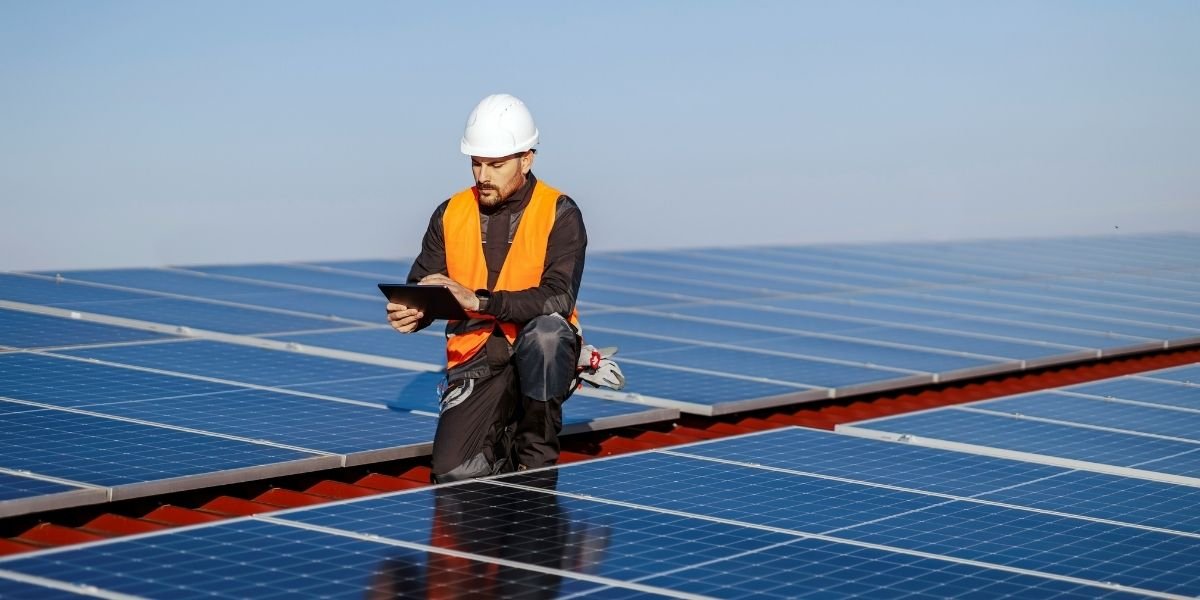






Portland has introduced a new solar-plus-storage microgrid in its historic Skidmore district, marking a milestone in the city’s clean energy efforts. Launched in early 2026, the project is being developed by sustainable engineering firm PAE in collaboration with SolarEdge Technologies. It is notable for being subsidy-free and market-rate, making it one of the first projects of its kind in the U.S. This microgrid is designed to integrate clean energy systems while enhancing the city’s energy resiliency.
The Skidmore district project is also Portland’s first fully certified Living Building, meeting the rigorous standards set by the Living Building Challenge. These standards require buildings to achieve net-zero energy, implement water reuse strategies, and uphold principles of sustainability across equity and design. The project is seen as a model for future urban energy solutions, showcasing how cities can integrate renewable energy systems into dense urban environments.
Solving Grid Challenges with New Microgrid Technology
One of the primary challenges the Portland solar microgrid addresses is the issue of grid interconnection limits that often hinder the development of renewable energy projects. The microgrid is designed as a “grid-forming” system, allowing it to overproduce clean power, island during outages, and operate independently when necessary. This innovative approach helps to demonstrate how microgrids can function within existing regulatory constraints while enhancing grid resiliency and ensuring a stable energy supply during power disruptions.
The grid-forming technology allows the microgrid to disconnect from the larger grid during an outage and continue supplying power to local areas, providing a reliable backup energy source. This breakthrough represents a significant step forward for microgrid systems, offering other cities a template for energy independence during grid failures.
Portland’s Commitment to Energy Resilience
Beyond the Skidmore district, Portland’s Fire Station 1 has adopted a similar solar-plus-storage microgrid to ensure resilience during emergencies like wildfires or earthquakes. The system is designed to minimize reliance on fossil-fuel-powered backup generators while providing uninterrupted power to critical services. The station can continue operating without fuel supply interruptions, thanks to intelligent energy management that optimizes battery use and reduces waste.
This microgrid, like the Skidmore district project, serves as an example of how microgrids can support community resilience by maintaining essential services during power disruptions. It also underscores Portland’s ongoing commitment to clean energy integration and the pursuit of sustainable solutions that address both local energy needs and climate adaptation goals.
Oregon Advances Legislation for Community-Owned Microgrids
In 2025, Oregon lawmakers advanced legislation aimed at establishing a statewide framework for community-owned microgrids. This framework allows neighborhoods to generate, distribute, and store their own energy, enhancing energy independence and providing greater flexibility in times of emergency. The goal of these community microgrids is to provide the option to remain connected to utilities or operate independently, depending on the situation.
The legislation supports projects like Portland’s solar microgrid and signals the state’s momentum toward decentralized energy solutions. Community microgrids are becoming a more prominent focus as the state looks to foster localized energy production that can reduce reliance on large, centralized grid systems.
This initiative has the potential to reshape the way cities and communities in Oregon manage their energy systems, enabling localized control and improving energy security for residents.
Portland’s Solar Microgrid: A Model for the Future
The launch of Portland’s solar microgrid marks a major step forward in the city’s efforts to address energy resilience and climate adaptation. The project demonstrates the scalability of solar power combined with battery storage to create a self-sufficient and reliable energy system in urban environments. This integration of renewable energy solutions is expected to lower energy costs and increase reliability for local businesses and residents, while also reducing the city’s overall carbon footprint.
As Portland continues to experiment with decentralized energy solutions, this project sets a precedent for how solar microgrids can be integrated into existing urban infrastructure. The combination of solar generation and battery storage offers a practical pathway for cities to reduce dependence on traditional power grids while enhancing resilience against power outages.
Strategic Implications for Urban Energy Systems
Portland’s solar microgrid initiative offers valuable lessons for other cities aiming to modernize their energy systems. As cities face rising utility costs and more frequent power disruptions, decentralized energy solutions such as microgrids become increasingly attractive. The ability to integrate renewable energy with storage systems allows cities to balance sustainability with reliability.
Portland’s focus on community resilience and energy security will likely influence future urban energy projects across the country. As the city continues to prioritize sustainable infrastructure and decentralized energy systems, it is positioning itself as a leader in the transition to clean energy solutions. The project also showcases how cities can take steps toward meeting ambitious climate goals while ensuring that energy needs are met reliably and affordably.
