







By: Andre Porter
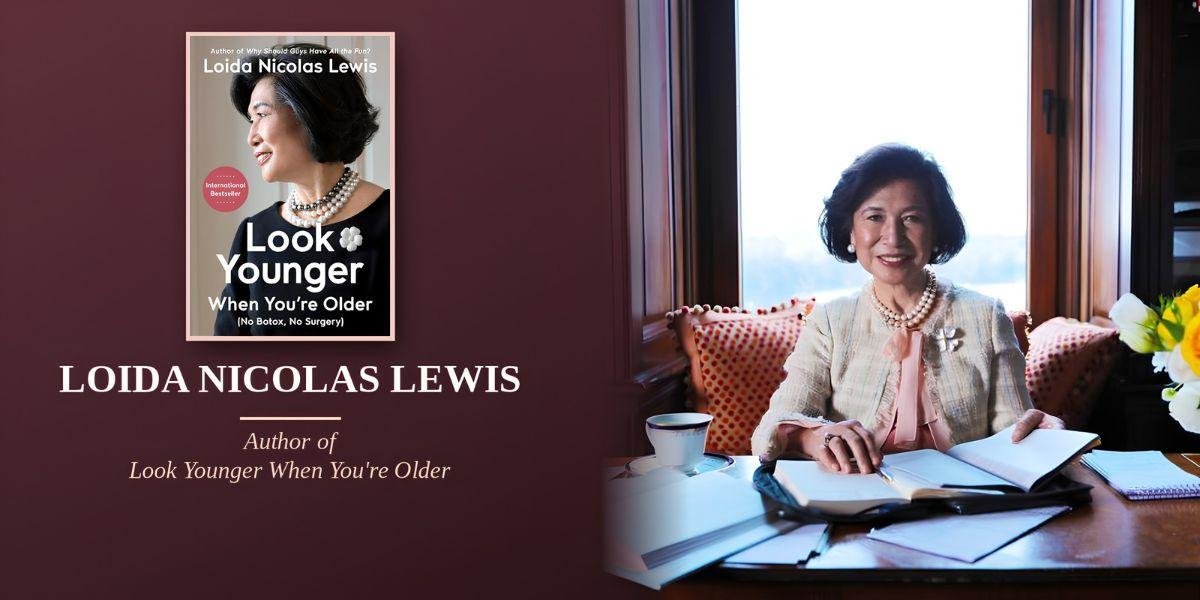
Wellness books tend to arrive with a formula. There is usually a central concept, a set of steps, and an implicit promise that following the steps will produce the concept in your own life. Loida Nicolas Lewis’s Look Younger When You’re Older does not quite work this way. It is more like a conversation with someone who has thought carefully about aging for decades and has arrived at conclusions that are specific to her but organized well enough to be useful to others. The conclusions are grounded in faith, in daily practice, in friendship, and in a philosophy of beauty that starts from the inside and works outward.
Lewis is in her eighties. She is a lawyer, former CEO, civic leader, and philanthropist. She was born in Sorsogon, in the Philippines, and built a remarkable life across two countries and multiple careers. She is the kind of person whose trajectory most readers will know only partially, and reading this book offers a fuller picture, one that makes her advice feel earned rather than convenient.
The book begins with the spirit. Lewis writes about her Zen meditation practice, her faith, the prayers and Bible passages she relies on, and the way she has structured daily life to include time for reflection and gratitude. She is specific in a way that wellness writing often avoids. She does not describe a generic mindfulness practice; she describes her practice, with the particular texts and habits that constitute it. This specificity is what gives the early chapters their authority.
The practical chapters that follow cover skincare with similar precision. Lewis names what she uses, including both luxury brands and accessible options, and explains why each earns its place in her routine. She describes hydration, exercise, and the discipline of consistency. She began exercising at 45. She developed her skincare habits in her fifties. For readers who have convinced themselves that it is too late to start, she is a persistent counter-example.
There is a chapter on community that reflects something important about how Lewis understands wellness. She does not see it as a solo project. Her network of friendships, her decades of civic engagement, and her advocacy work all point to a person who finds sustenance in connection. Several of her friends contribute their own tips in this section, and the resulting texture is richer for the multiple voices.
The book does not make promises it cannot keep. Lewis is not claiming that everyone who follows her practices will look as she does. She is claiming that the practices work, that she has the evidence of her own life to support that claim, and that the reader deserves to have access to them. That modesty is part of what makes the book trustworthy. She is not selling a product. She is sharing a philosophy.
At 151 pages, the book is compact enough to read in an afternoon and substantial enough to return to. The tone is warm and unhurried, the voice of someone who has nothing to prove and something genuine to offer.
Look Younger When You’re Older is waiting for you on Amazon.
