Portland News

East Portland Community Solar Project Could Cut Bills for 140 Homes

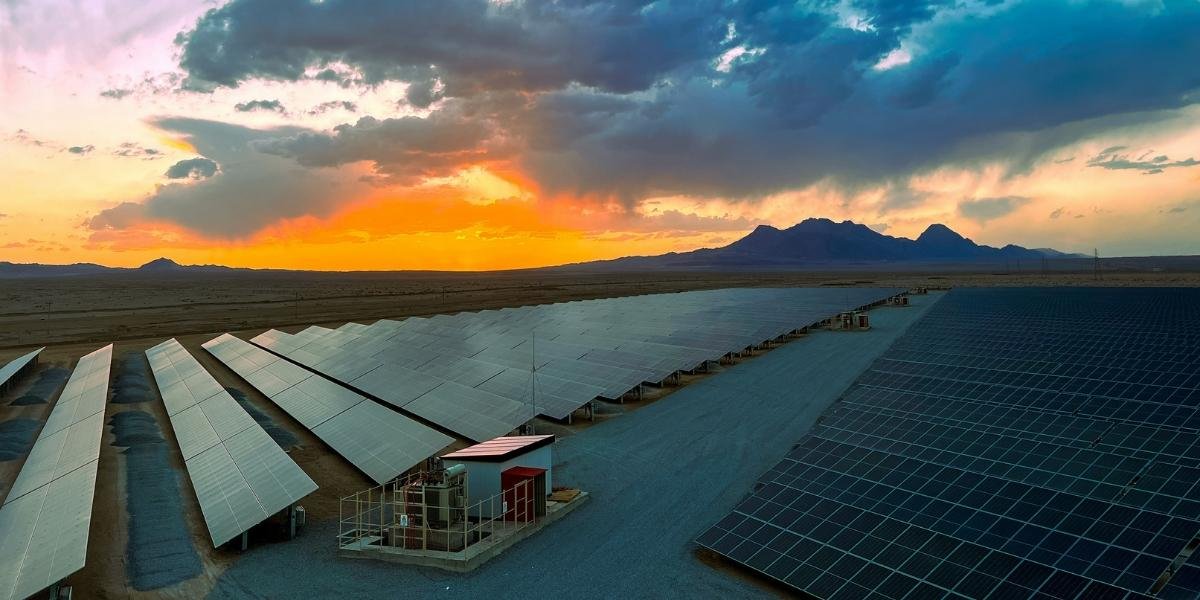
The East Portland community solar project is taking shape on a former landfill along Northeast 82nd Avenue and could save about 140 qualifying households an estimated $300 annually. APANO, Bird Alliance of Oregon and Bonneville Environmental Foundation are among its partners. Eligibility rules and the construction schedule will determine when subscribers might benefit.

Key Takeaways

  • The 800-kilowatt installation is planned for a site across from McDaniel High School in Northeast Portland.
  • October 2026 reporting puts the potential reach at roughly 140 households, with projected savings of about $300 per household annually.
  • Current project enrollment guidance specifies Portland residents served by Pacific Power who meet low-income requirements.
  • Construction is expected to finish around February 2027, while a project partner lists spring 2027 as the operational target.

Construction of seven solar arrays on Northeast 82nd Avenue is creating a new option for households that cannot install rooftop panels. The solar electricity will enter the utility grid, and eligible subscribers will receive credits on their existing power bills instead of power directly from equipment on their properties.

Oregon Public Broadcasting reported October 21 that about 130 subscription places were available. Bonneville Environmental Foundation’s August project page projected about 170 households, while October reporting described approximately 140. Neither estimate represents subscriptions already delivering credits.

Bill Credits Could Reduce Annual Electricity Costs by $300

Community solar subscribers pay for a share of electricity produced at an off-site installation. The utility applies the value of that share as a credit, and the subscription manager charges a separate fee. For qualifying low-income customers, the subscription is structured so the credit exceeds the associated charge.

APANO estimates annual bill savings of about $300 per enrolled household and combined savings of approximately $900,000 over 20 years. Those figures are projections, not results from an operating facility.

Bonneville Environmental Foundation provides a more detailed illustration. Its example five-kilowatt subscription would generate an estimated $715 in first-year bill credits and carry $358 in subscription charges, producing a projected net reduction of $358. This example reflects specified generation and pricing assumptions rather than a fixed annual payment to every participant.

Solar output varies by season, and subscription sizes may differ. Credits can lower the amount owed, but they do not make electricity service free. Households continue receiving regular utility bills from their existing provider.

The project arrives amid wider discussion of Oregon electricity rate changes, although individual bills differ by utility, usage and rate plan. The Oregon Community Solar Program provides income-qualified subscribers with reduced fees, no upfront charges and no termination fees. Those protections do not establish a particular dollar amount of annual savings.

The East Portland Community Solar Project Has Strict Eligibility Rules

APANO’s enrollment information lists three requirements for the specific 82nd Avenue project. Applicants must live within Portland city limits, receive electricity from Pacific Power and meet the program’s low-income standard, which APANO describes as household earnings at or below 80% of Oregon’s state median income.

The statewide Oregon Community Solar Program also works with Portland General Electric and Idaho Power customers. That broader eligibility does not extend automatically to this installation. Bonneville Environmental Foundation’s project information specifically identifies Pacific Power, so households served by another utility would need to look at other projects.

Homeownership is not required. Renters and residents of apartments, condominiums, mobile homes and houses can potentially participate without installing equipment. The subscription attaches to a qualifying electricity account rather than to ownership of a roof. Any applicant must still meet utility, income and program verification conditions.

Enrollment involves reviewing household income and electricity account details before a subscription can be assigned. The state program notes that customers may be placed on a waitlist when a suitable project is unavailable. The approximately 130 places reported on October 21 should therefore be treated as a dated availability figure, not a current guarantee of an opening.

APANO has also worked on a separate Jade Apartments housing project in East Portland that includes energy-efficiency features and solar equipment. That development is distinct from the 82nd Avenue subscription program. The latter is intended to reach qualifying households across Portland’s Pacific Power service area rather than only residents of one building.

A Former Landfill Pairs Solar Power With Wildlife Restoration

The solar installation occupies roughly two acres of a 12.5-acre property that Bird Alliance of Oregon purchased in 2024 across from McDaniel High School. The land formerly served as a quarry and later received demolition debris. Bird Alliance plans a nature sanctuary, trails and a future wildlife care center alongside the generating equipment.

Micah Meskel, conservation director with Bird Alliance of Oregon, told Oregon Public Broadcasting that the organization wants to help with “transforming what was once a landfill into a community asset.” The comment describes the wider site plan, which is separate from the calculation of household solar credits.

Restoration is already underway. Bird Alliance reported that more than 100 participants joined an April 4, 2026, planting event with Friends of Trees, putting 540 native trees and shrubs in the ground. McDaniel High School students also helped plant native vegetation earlier that month. The work is intended to restore habitat across portions of the property.

The construction effort also includes job training. Solar contractor Imagine Energy has worked with the nonprofit Leaders Become Legends to provide experience in solar installation and electrical trades. Local reporting describes the partnership as offering workforce pathways for people who have experienced incarceration, with attention to the support trainees need to enter the field.

Funding comes from the Portland Clean Energy Community Benefits Fund. Oregon Public Broadcasting identified the 82nd Avenue installation as the seventh community solar project backed by the fund. Bonneville Environmental Foundation is handling project and subscriber management, and the solar equipment is part of Oregon’s regulated community solar program.

The schedule still has two stages. An October 21 report pointed to completion around February 2027, while Bonneville Environmental Foundation’s published project page lists spring 2027 as the expected start of operations. Electricity credits will depend on the array becoming operational, so neither target should be taken as a confirmed first billing date.

Households can check terms and availability with APANO at solar@apano.org or with Bonneville Environmental Foundation at 855-317-9991. Until the East Portland community solar project begins producing power, the $300 annual figure remains a planning estimate rather than a verified household saving.

Frequently Asked Questions

Who can join the East Portland community solar project?

Applicants must live in Portland, have Pacific Power electricity service and meet income requirements. APANO sets the threshold at no more than 80% of Oregon’s state median income for this project.

How much could a subscriber save each year?

APANO estimates about $300 in annual electricity-bill reductions per participating household. Actual savings will depend on a subscriber’s share of production and the applicable subscription charges.

Do renters need rooftop solar panels?

No. Community solar allows eligible renters and other customers without suitable roofs to receive credits from an off-site array instead of installing panels at home.

When could the project start lowering bills?

Construction has been projected to finish around February 2027, with operations expected in spring 2027. Credits would begin only after the installation is producing electricity and a subscriber’s account is active.

DPB’s “God Mode” Is More Than a Declaration of Faith; It’s the Sound of an Artist Who Refuses to Surrender

By: Daniel Harrison

There comes a point in a musician’s career when the question is no longer whether he can make a successful record, but whether he still has something important to say. For DPB, the veteran Christian hip-hop artist whose career stretches across more than three decades, that question receives a forceful answer in “God Mode,” a recording that approaches faith not as a private consolation but as an active, transformative force.

There is nothing tentative about this music. Nothing apologetic. Nothing that suggests an artist searching for approval.

DPB knows what he believes, and he has made a record determined to communicate that belief with every available ounce of conviction.

Originally released in 2022 and now receiving renewed attention through his 2026 album Undefeated, “God Mode” represents a fascinating intersection of hip-hop tradition, gospel testimony, and contemporary popular culture. Its central metaphor comes from video games, where activating God Mode allows a player to transcend ordinary limitations.

DPB takes that familiar concept and gives it an entirely different meaning.

His argument is that spiritual victory isn’t something believers must wait to receive. Through faith in Jesus Christ, they already possess the authority necessary to confront adversity, resist despair, and pursue lives defined by purpose rather than defeat.

The song’s central declaration, “Jesus Christ is the God Code,” may initially sound like an unlikely marriage of technology and theology. Yet its effectiveness lies in its simplicity. DPB has found a contemporary expression for an ancient religious conviction, and he delivers it with the assurance of someone who believes the message matters more than the cleverness of its packaging.

That conviction is what ultimately gives “God Mode” its character.

A Veteran Artist Finds New Momentum

The song’s renewed radio success provides an important context for understanding its impact.

“God Mode” rose from No. 14 to No. 9 on the published National Radio Hits Christian chart, placing DPB among artists including TobyMac, Forrest Frank and Brandon Lake.

Earlier in the campaign, the single also reached No. 2 on Christian Music Weekly’s Rhythmic Airplay chart, following the National Radio Hits AC success of “Back in the Day.”

These achievements are significant not simply because they demonstrate commercial momentum, but because they reveal an artist whose message continues to find an audience despite the extraordinary changes that have transformed the recording industry.

DPB has witnessed hip-hop evolve from an emerging cultural movement into one of the dominant musical languages of the modern world. He has seen formats disappear, promotional methods become obsolete, and entire generations of performers arrive and depart.

Yet he continues to make records that sound invested in the present.

That may be his most impressive accomplishment.

The Power Of Conviction

Musically, “God Mode” draws its strength from the relationship between rhythm and repetition. DPB’s delivery is emphatic, his language direct, and his recurring declarations designed to build the kind of collective energy associated with both hip-hop performance and gospel worship.

The track isn’t interested in the intricate verbal puzzles that dominate certain corners of contemporary rap. Its purpose is communication, and its methods are closer to those of a preacher addressing a congregation than a lyricist demonstrating technical superiority.

That approach carries risks.

The repeated affirmations occasionally leave the listener wishing for greater narrative development. A song built around such an imaginative premise might have benefited from more detailed storytelling or a broader range of emotional perspectives.

But these limitations are inseparable from the record’s essential character. DPB is not attempting to describe spiritual authority from a distance. He wants listeners to experience the confidence he believes it can produce.

His performance is therefore less an explanation than an invitation.

And there is something deeply rooted in American popular music about that approach.

From the gospel quartets of the early twentieth century to the ecstatic performances of soul’s greatest singers, conviction has often mattered as much as musical sophistication. The ability to communicate belief, to make an audience feel that something consequential is happening, has always distinguished memorable performances from merely accomplished ones.

DPB belongs to that tradition.

Beyond The Recording

The possibilities surrounding “God Mode” may also extend into other entertainment forms. DPB has explored the idea of developing the concept into a video game, with a potential television spinoff offering another opportunity to explore its themes of perseverance, spiritual struggle and transformation.

Neither project should yet be regarded as a confirmed production, but the ambition is revealing.

After decades in music, DPB continues searching for new ways to communicate his central message.

The prospective game is especially appropriate because the song already contains the foundation of an interactive narrative: obstacles to overcome, strength to discover, and the belief that victory begins with recognizing one’s identity.

Yet the real achievement remains the recording itself.

“God Mode” is not without imperfections. Its repetition can become insistent, and its musical architecture favors impact over subtlety. Nevertheless, it succeeds because the artist never loses sight of his purpose.

At a time when popular music frequently confuses irony with intelligence and detachment with sophistication, DPB offers something increasingly uncommon: unqualified sincerity.

He believes the words he is singing.

He believes they can change lives.

And he has committed his musical identity to that proposition.

Undefeated is an appropriate title for the album that carries this song. It describes not the absence of struggle, but the determination to continue through it.

That is what makes “God Mode” more than another inspirational single. It is the statement of an artist who has survived long enough to understand that conviction, when sustained by experience, can become its own kind of power.

DPB isn’t asking the listener to admire his victory. He’s asking the listener to discover the possibility of their own.

And in that distinction lies the enduring value of “God Mode.”

The H-2B Visa Cap Is Full for Early FY2027, How Seasonal Employers Plan the Next Window

The H-2B is the visa American businesses use to hire foreign workers for temporary non-agricultural jobs: hotel and restaurant seasons, seafood processing runs, landscaping contracts, construction pushes. Demand for it routinely outruns supply, which makes the program as much a scheduling problem as a legal one.

The current state of that schedule is now set. In early September 2026, USCIS announced it had received enough petitions to meet the H-2B cap for the first half of fiscal year 2027, and new cap-subject petitions requesting start dates before April 1, 2027 are being rejected. For employers who missed this window, the planning question becomes the next one, and the rules below explain how to get there prepared.

The Cap Math Employers Plan Around

Congress caps H-2B at 66,000 visas per fiscal year, split evenly: 33,000 for workers starting in the first half of the fiscal year (October 1 through March 31) and 33,000 for the second half (April 1 through September 30). Unused first-half numbers roll into the second half, but nothing carries over from one fiscal year to the next.

The practical rhythm follows from that arithmetic. There are two filing waves a year, each fills on its own schedule, and once a half’s cap is met, only cap-exempt petitions are accepted. An employer who files late is not queued for the same window; the case waits for the next one.

Temporary Need Comes In Exactly Four Shapes

Qualifying for H-2B means proving three things: that there are not enough able and willing US workers for the job, that hiring will not adversely affect the wages and working conditions of similarly employed US workers, and that the employer’s need is genuinely temporary.

Temporariness is not judged loosely; it must fit one of four defined patterns. A one-time occurrence, a seasonal need tied to a recurring annual pattern, a peak-load need that supplements permanent staff during a surge, or an intermittent need. Framing the business’s real staffing pattern in the right category is one of the first drafting decisions in the case.

The filing sequence has three stages, in fixed order: a temporary labor certification from the Department of Labor, then Form I-129 to USCIS, then visa issuance and admission for the workers. The certification is a prerequisite; without it, the petition cannot be filed. A realistic calendar therefore stacks all three stages in front of the intended start date.

The Worker-Protection Rules Employers Cannot Get Wrong

Two compliance rules shape the program. The first concerns prohibited fees: no job placement fee, penalty, or similar payment connected to the H-2B employment may be collected from a worker at any time, including indirectly through wage deductions. USCIS denies or revokes petitions where prohibited fees surface, and a violation can affect the employer’s future H-2A and H-2B filings for years.

The second is the stay clock. H-2B status is limited to three years in total, and prior time spent in other H or L classifications counts toward it. A worker who reaches the limit must spend at least 60 uninterrupted days outside the US before becoming eligible again.

Mechanics Worth Knowing Before Filing

A single petition can cover up to 25 named workers on one labor certification, and the total number of beneficiaries across petitions cannot exceed the certified number. Extensions run in increments of up to one year, and each extension requires a fresh labor certification covering the new period.

Employers also carry reporting duties after the workers arrive: no-shows, walk-offs, terminations, and early completions must be reported to USCIS within two workdays. On the family side, spouses and children under 21 qualify for H-4 status, which permits accompanying the worker but does not carry work authorization.

Working Backward From April 1

For employers targeting the second-half window, the plan is built in reverse: fix the start date, place the I-129 in front of it, and place the labor certification timeline in front of that, with margin for the cap itself. An H-2B visa lawyer builds that reverse calendar and keeps the petition compliant with the fee rules, and Grape Law’s H-2B guide sets out the requirements and the filing steps in order for both employers and the workers they recruit.

Cap status and rules were verified against USCIS records as of September 2026.

Disclaimer: This article is for general informational purposes only and does not constitute legal advice. Immigration requirements, fees, processing times, and visa availability may change. Every case depends on its specific facts and circumstances. Consult a qualified immigration attorney regarding your situation.