






As evening settles over Portland on November 11, residents are stepping outside, scanning the skies, and hoping the clouds will break just enough to reveal the Northern Lights. NOAA’s forecast of a G4 “severe” geomagnetic storm has turned into a live community event, with neighbors gathering in parks, rooftop bars, and backyards to catch a glimpse of the aurora borealis. For a city more famous for rain than cosmic displays, the anticipation itself feels electric.
Social media is buzzing with posts from Mt. Tabor, Rocky Butte, and Sauvie Island, where locals are setting up cameras and telescopes. Families are bundling up against the chill, children are asking questions about the science behind the lights, and amateur photographers are ready to capture the moment if the skies cooperate. Even in a city accustomed to gray evenings, the possibility of neon streaks overhead has captured imaginations.
For Portlanders, this isn’t just about science, it’s about community. Rooftop bars have extended hours, coffee shops are serving aurora‑themed drinks, and OMSI scientists are fielding questions from curious residents. The Northern Lights have become a shared cultural moment, reminding the city that even under its signature clouds, the sky can still surprise.
Why the Northern Lights reached Oregon
Tonight’s aurora is the result of a coronal mass ejection (CME) earlier this week, sending solar plasma toward Earth. When those charged particles collide with Earth’s magnetic field, they produce glowing curtains of light. Normally confined to polar regions, the storm’s intensity has pushed visibility as far south as Oregon, giving Portlanders a rare chance to witness the spectacle.
Scientists explain that the sun is approaching its “solar maximum,” a peak in its 11‑year cycle that increases the frequency of geomagnetic storms. This cycle means more opportunities for auroras in unusual places, including Portland. For residents, it’s a reminder that cosmic forces can occasionally override local weather patterns and bring global phenomena to the Pacific Northwest.
While the lights are dazzling, experts warn of risks. Severe storms can disrupt power grids, GPS, and communications. Oregon has avoided major outages so far, but the balance between beauty and vulnerability adds drama to the evening. The Northern Lights are not just a spectacle, they are a story of resilience and wonder unfolding in real time.
Where Portlanders are watching
Reports of aurora activity are coming in from across Oregon. In Central Oregon, residents in Bend and Redmond are already sharing faint streaks of green. In Eastern Oregon, clearer skies are giving stargazers a better chance to see the aurora. In Portland, however, cloud cover is making viewing tricky, frustrating many who have gathered at Mt. Tabor, Rocky Butte, and Sauvie Island.
Despite the clouds, anticipation itself has become an event. Rooftop bars downtown are hosting “aurora watch parties,” while OMSI is offering live updates on visibility. Families are driving east toward clearer skies, turning the aurora chase into spontaneous road trips. The Northern Lights have become a reason to explore Oregon’s diverse landscapes tonight.
Local pride is evident in the way communities are responding. From neighborhood groups sharing tips on the best vantage points to local radio stations broadcasting aurora updates, Portlanders are treating the event like a festival. Even if the clouds win tonight, the excitement has already united the city in a shared sense of wonder.
The science behind the spectacle
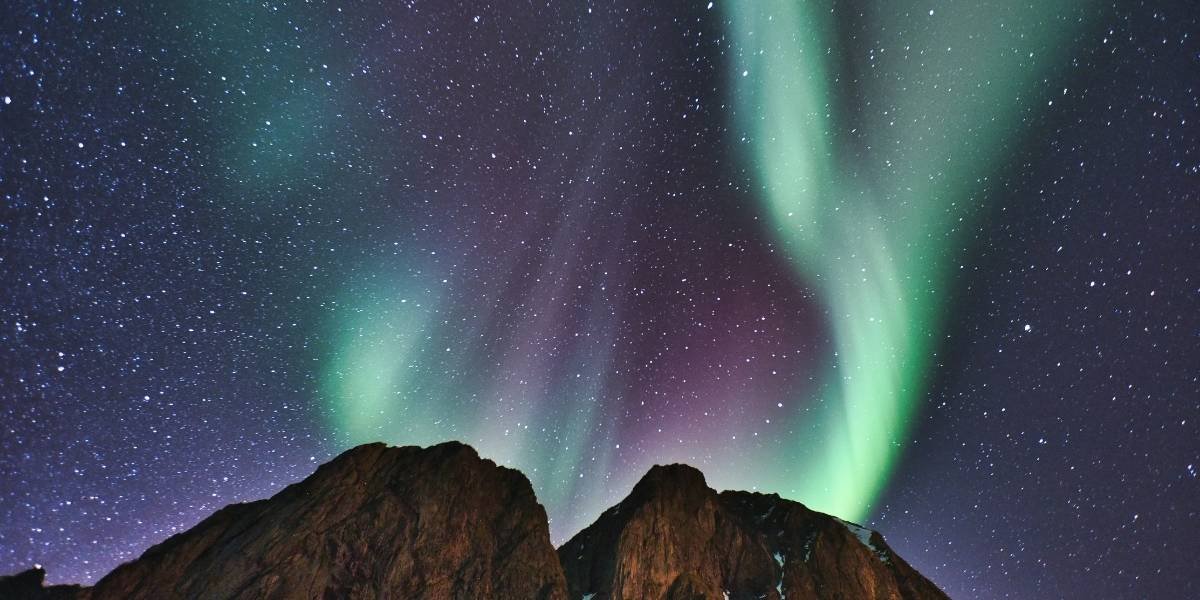
Auroras occur when solar particles collide with atoms in Earth’s atmosphere, producing light. The colors depend on the type of gas involved: oxygen creates green and red hues, while nitrogen produces blue and purple. Portlanders who managed to see faint glows tonight are reporting green streaks, a sign of oxygen interaction at high altitudes.

Photo Credit: Unsplash.com
The November 11 storm is classified as a G4 severe geomagnetic storm, one of the strongest in recent years. Such storms are rare but not unprecedented, and scientists warn that more could occur as the solar cycle peaks. For residents, this raises questions about how often Oregon might see auroras in the coming years.
Beyond science, the aurora carries cultural significance. Throughout history, the Northern Lights have been seen as omens, inspirations, and artistic muses. In Portland, tonight’s event is sparking conversations about wonder and possibility, reminding communities that even in a tech‑driven age, nature retains the power to inspire.
Cultural and community impact
The Northern Lights are quickly becoming a cultural phenomenon in Portland. Social media platforms are lighting up with photos, videos, and live streams, turning the event into a viral sensation. Influencers and local creators are leveraging the moment to boost engagement, proving that cultural events can drive digital growth.
Community organizations are joining the conversation. OMSI is hosting educational sessions, while schools are encouraging students to learn about solar storms. For Portland’s creative community, the aurora is becoming a muse, inspiring art, poetry, and music. Tonight’s event blends science with culture, reinforcing Portland’s reputation as a city where curiosity thrives.
Neighborhoods are embracing the aurora as a shared experience. From Southeast Portland families gathering in backyards to North Portland residents watching from rooftops, the event is weaving itself into the city’s cultural fabric. The Northern Lights are more than a spectacle, they are a reminder of Portland’s ability to turn even fleeting phenomena into lasting community stories.
What comes next for Portland
As the sun approaches its solar maximum, scientists predict more geomagnetic storms in the coming years. This means Portland may have additional opportunities to witness the Northern Lights. For stargazers, this is exciting news. For educators and community leaders, it’s a chance to prepare for future cultural moments that blend science and wonder.
For Portlanders, tonight’s aurora was a reminder that the city’s skies still hold surprises. Even in a place known for rain and bridges, the Northern Lights brought a rare moment of wonder that united neighborhoods and sparked conversation. Whether or not the clouds cleared fully, the experience showed how quickly Portland can rally around a shared moment of awe.
