





By: Sara Wolfe
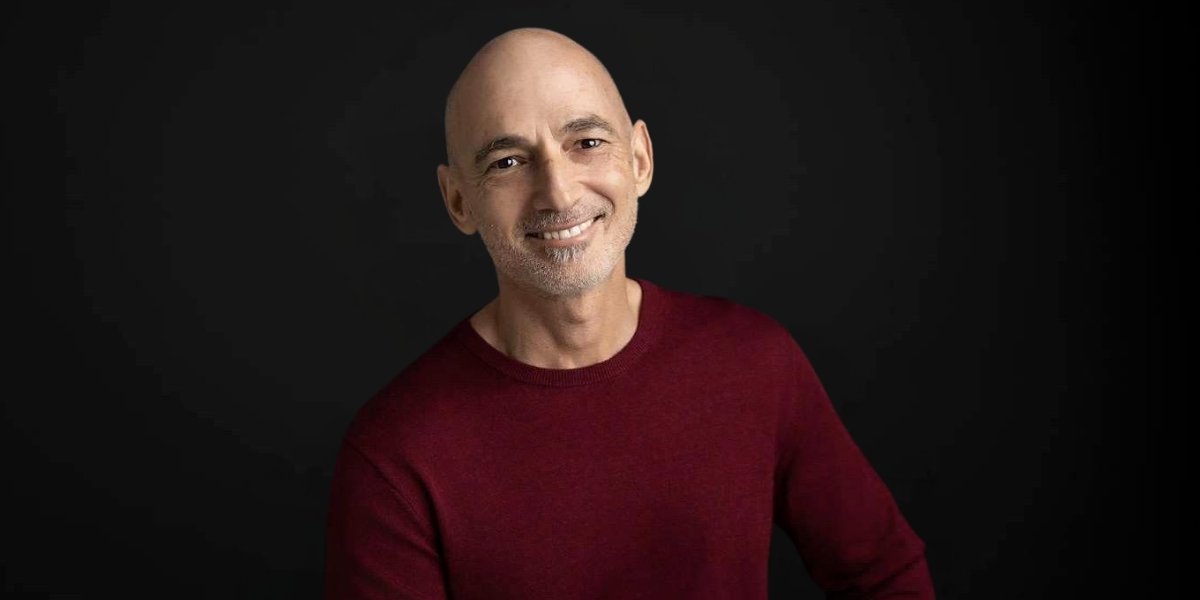
Nir Peled does not talk about resilience like a motivational speaker. He talks about it like someone diagnosing a broken system under pressure. That perspective comes from a life spent in high-stakes environments: as an officer in an elite IDF unit, as a Fortune 500 technology executive, and later as a stroke survivor rebuilding the most personal system of all. His book,Beyond 100%: Rebuilding Life After It Breaks, translates that experience into a practical framework for people and organizations navigating disruption.
Peled’s authority is not academic. It is lived. He has survived seven catastrophic events: a bombing in Sinai, anaphylaxis, the 2004 Indian Ocean tsunami, a violent kidnapping and robbery in the Amazon, cancer, a motorcycle accident, and a stroke at 49. Each event presented a different kind of collapse. The stroke, however, transformed his private survival strategy into a structured model.
“In tech leadership, you are constantly dealing with systems that break and need to be rebuilt under pressure with incomplete information,” Peled says. “Managing uncertainty, moving forward without knowing exactly where you’re going. Recovery is the same environment. The difference is that in the corporate world the system that breaks is external. In recovery, it’s you.”
That sentence explains why Beyond 100% feels different from many adversity narratives. Peled isn’t just telling readers that he survived. He is showing how he approached the rebuilding. He broke the problem into parts, measured small gains, and used structure to manage chaos. “The thinking I applied, breaking the problem down, measuring small progress, using structure to manage chaos- that’s what became the framework,” he says.
The framework is built around three pillars: Body, Mind, and Spirit. It also includes seven recovery rules, the principle of surrender, four stages of rebuilding, and a recovery blueprint for how capabilities return. Peled maps that return through four phases: manifestation, sign of life, practice, and complex integration. The language may sound systematic because it is. He designed it the way an engineer would design a repeatable process.
“I developed it the way an engineer approaches a problem,” he says. “I looked at what was actually working across my recoveries, mapped the patterns, and built a repeatable process out of them.”
The first pattern was the 1% Rule. “On any given day, you don’t need to be dramatically better than yesterday,” Peled says. “You need to be 1% better. That’s it.” In a corporate environment, that might sound like incremental improvement. In stroke recovery, it becomes a survival strategy. A small gain can be a movement, a word, a minute of breathing, a laugh, or even rest. Progress becomes measurable without becoming punishing.
Peled is especially interested in people who were once known as the strong ones: the achievers, leaders, caregivers, executives, and problem-solvers who suddenly find themselves on the receiving end of crisis. “My primary audience is people in their 30s to 60s who were the strong ones, the achievers, the people everyone else leaned on, who suddenly find themselves unable to recognize their own life,” he says. “They don’t want pity, and they don’t want vague inspiration. They want a plan.”
That plan matters beyond medical recovery. Organizations also break. Careers break. Families absorb shocks. Leaders burn out. Teams face crises with incomplete information and no ensured outcome. Peled’s framework is used by individuals and organizations because the underlying challenge is similar: something that once worked no longer does, and the next version must be built while the damage is still being felt.
The phrase Beyond 100% captures that philosophy, but Peled resists any easy interpretation. “I’ll never be the same Nir, the same ‘100%’ as I was, not physically or mentally,” he says. He is not claiming trauma made him better. He is saying that rebuilding can create access to parts of the self that were unreachable before. The goal is not restoration. It is redesign.
The book began as a recovery journal. Peled recorded videos of himself learning to speak again, then typed as his abilities returned. Over time, he realized he was not only documenting recovery. He was developing the guide he wished had existed when his world broke.
“I am a practical man,” he says. “I like motivation and inspiring stories, but I need something tangible. Something I can use tomorrow morning.” That practicality bridges his executive background and recovery work, and gives the book relevance for readers facing crisis in any form.
Today, Peled teaches yoga and meditation to stroke and brain injury survivors in Northern California. He is still practicing what he teaches: rebuilding through structure, surrender, small steps, and purpose. His central lesson is not that broken systems return to what they were. It is that they can be rebuilt smarter, stronger, and more honestly than before.
Beyond 100%: Rebuilding Life After It Breaks is now available on Amazon,
