Portland News

When Music Becomes Medicine: CattSue and Alex Krawczyk Turn Life’s Deep Wounds Into Songs of Healing and Hope


By: Jackson Knight

Two independent singer-songwriters, separated by geography but united by purpose, are proving that music’s greatest power isn’t always to entertain. Sometimes, it’s to help us survive.

There is a particular kind of song that doesn’t simply pass through your ears. It finds its way into the places you’ve spent years trying to protect. It reminds you of someone you’ve lost, a struggle you’ve survived, or a version of yourself you thought was gone forever. And somehow, instead of reopening the wound, it helps you begin to heal.

For Jacksonville, Florida-based singer-songwriter CattSue and Toronto, Canada-based folk artist Alex Krawczyk, that extraordinary connection between music and emotional recovery isn’t merely an artistic concept. It is the foundation of their creative identities.

Both women have experienced profound loss. Both have discovered songwriting as a means of processing grief. And both have emerged with musical catalogs that offer listeners something increasingly valuable in an uncertain world: permission to hurt, courage to continue, and reassurance that they aren’t alone.

Their musical styles may differ, but their messages share a remarkable common heartbeat.

CattSue: Finding Beauty in the Broken Places

For CattSue, songwriting often begins where ordinary conversation becomes impossible.

Her 2026 album, Heartstrings and Highways, released September 23, is an intimate, 11-song exploration of family, grief, motherhood, addiction, survival, and the complicated process of rebuilding a life. Blending country, pop, and contemporary singer-songwriter influences, the collection feels less like a conventional album than a personal journal opened for the benefit of strangers.

Among its most poignant moments is “A Whisper on the Wind,” a tribute to the mother CattSue lost when she was just four and a half years old.

Rather than approaching grief through sweeping declarations, the song embraces the small details that make memory so powerful: childhood photographs, familiar places, and a beloved Mrs. Beasley doll. These fragments become emotional bridges between a daughter and the mother whose love continues to shape her decades later.

Writing the song was itself an act of healing.

“It was one of the hardest things I’ve ever done, but also one of the most healing,” CattSue explained in an earlier interview. “Writing the song allowed me to take the pain of losing my mom and transform it into something beautiful.”

But CattSue’s commitment to healing extends beyond her personal history.

“In the Light” addresses the experiences of human trafficking survivors, reflecting her outspoken advocacy against exploitation. Elsewhere, songs including “Broken” and “When the Clouds Come Home” confront the emotional consequences of hardship and addiction.

Importantly, these compositions don’t suggest that suffering disappears simply because someone chooses hope. Instead, they acknowledge that recovery can be messy, nonlinear, and deeply personal.

CattSue writes about survival without pretending that scars cease to exist. Her music suggests that those scars can eventually become sources of understanding, empathy, and connection.

Alex Krawczyk: The Gentle Strength of Beginning Again

If CattSue’s healing arrives through intimate confession, Alex Krawczyk’s often comes through quiet contemplation.

The Canadian singer-songwriter began her musical journey following the traumatic loss of her parents, turning to songwriting as a way of navigating overwhelming grief.

Her 2022 debut, Le Olam, introduced a reflective artist whose gentle folk arrangements and thoughtful lyrics encouraged listeners to search for meaning beyond life’s most painful circumstances.

Her second album, Wonders Await, released January 25, 2026, expands that philosophy across 13 songs exploring resilience, mindfulness, gratitude, and human connection.

Created with longtime collaborator and producer Robbie Roth, the album combines warm acoustic instrumentation, layered harmonies, and understated arrangements that allow its emotional messages to breathe.

One of its defining songs, “When The Road Is Uneven,” captures Krawczyk’s philosophy particularly well.

Rather than promising an escape from hardship, the composition emphasizes perseverance, kindness, and the comforting presence of music itself. Its gentle optimism feels earned rather than manufactured.

That distinction matters. Krawczyk doesn’t approach healing as a destination where all sadness disappears. She presents it as an ongoing practice of rediscovering beauty, connection, and purpose despite life’s uncertainties.

Outside music, her dedication to charitable work through the Krawczyk Family Foundation and Honey & Barry Sherman Legacy Foundation further reflects her commitment to helping others.

Two Voices, One Extraordinary Purpose

What makes CattSue and Alex Krawczyk particularly compelling is that neither artist relies on dramatic production or manufactured emotion to establish a connection.

Both understand the strength of vulnerability.

CattSue reaches into the raw experiences of love, loss, and survival, bringing difficult memories into the light. Krawczyk offers a gentler, almost meditative perspective, reminding listeners that compassion and gratitude can coexist with sorrow.

One often sings from the middle of the storm. The other seems to offer a hand as the clouds begin to separate.

Yet both recognize something essential: healing rarely happens in isolation.

A grieving daughter might hear CattSue’s remembrance of her mother and feel understood. Someone struggling through uncertainty might discover Krawczyk’s reassuring melodies and find enough strength to face another day.

Neither artist can promise that a song will erase trauma, cure depression, or resolve grief. Music is not a substitute for professional care when that care is needed. But it can provide emotional companionship, a language for complicated feelings, and a reminder that others have survived similarly painful experiences.

That is an extraordinary contribution in itself.

The Lasting Power of a Song

In an industry frequently preoccupied with algorithms, streaming totals, and viral popularity, CattSue and Alex Krawczyk represent a different measure of artistic success.

Their songs ask not how many people are listening, but how deeply those people are being reached.

They remind us that music doesn’t have to be loud to be powerful, complicated to be meaningful, or commercially dominant to change someone’s life.

Sometimes healing begins with nothing more than a familiar melody, an honest lyric, and the realization that somebody else understands.

For CattSue and Alex Krawczyk, transforming pain into music isn’t simply an artistic achievement. It’s an offering of hope.

And for listeners carrying wounds of their own, that offering can mean everything.

Portland’s Under-5 Population Falls More Than One-Third

Portland has experienced a substantial decline in its population of children younger than five, with newly reported U.S. Census Bureau figures showing a decrease of more than one-third since 2010. The demographic shift raises questions about future school enrollment, childcare availability and the long-term needs of families across the city. While lower birth rates are contributing to similar patterns in other urban areas, Portland’s changing population is becoming increasingly relevant to local education and family-service planning.

Key Takeaways

  • Portland’s population of children under five has declined by more than one-third since 2010, according to newly reported census figures
  • Children younger than five now represent approximately 3.9% of Portland residents, compared with 6.4% in 2010
  • Ethan Sharygin, director of Portland State University’s Population Research Center, points to lower birth rates as a factor affecting similar cities
  • Portland Public Schools is considering school consolidation proposals amid declining enrollment and changing demographic patterns
  • The shrinking population of young children has implications for childcare providers, early education programs and long-term community planning

New Census Data Shows Portland’s Population Decline Among Young Children

Newly reported U.S. Census Bureau data indicates that Portland has substantially fewer children younger than five than it did in 2010. The decline exceeds one-third, highlighting a significant change in the city’s youngest age group over the past decade and a half.

Children under five represented approximately 6.4% of Portland’s population in 2010, compared with about 3.9% in the latest reported figures. This reduction reflects a broader shift in the city’s demographic composition, with young children accounting for a smaller share of residents.

The findings are particularly relevant to institutions serving infants, toddlers and preschool-aged children. Childcare centers, early learning programs and public education systems rely on demographic information to understand potential enrollment patterns and plan services.

Although the figures establish a substantial population change, they do not identify a single cause. Birth rates, migration patterns and the number of families moving into or out of Portland can all influence the size of younger age groups.

For local organizations, the data provides an important reference point for assessing how population changes may affect services designed for children and families.

Portland’s Under-5 Population Has Fallen Since 2010

The decline in Portland’s youngest population represents a significant demographic change because children under five form the population that will enter elementary schools in the coming years.

A smaller group of young children can influence future enrollment expectations, particularly when the trend continues over an extended period. However, the effect on individual schools or childcare facilities depends on where families live and how local populations change.

Citywide figures also do not necessarily reflect conditions in every neighborhood. Some communities may experience larger reductions in young children, while others maintain relatively stable populations or attract new families.

These differences matter for education and childcare planning. Local institutions must consider not only the overall number of children but also how families are distributed across the city and which services remain accessible to them.

The census findings provide a starting point for understanding these patterns, although more detailed neighborhood data would be necessary to assess their effects on individual communities.

Lower Birth Rates Contribute to Changes in Portland Demographics

Lower birth rates are among the factors associated with Portland’s declining population of young children. Ethan Sharygin, director of the Population Research Center at Portland State University, has connected the city’s demographic changes with patterns affecting comparable urban areas.

When fewer children are born, the number of residents entering younger age groups can decrease over time. This can eventually affect the size of school-age populations and the demand for services associated with childhood development.

However, birth rates are not the only factor influencing Portland’s demographic composition. Migration also plays a role, particularly when families relocate to surrounding communities or move into the city.

A decline in the under-five population does not, by itself, establish whether fewer children are being born, more families are leaving or several demographic factors are operating together.

Understanding the causes requires examining birth records, migration patterns and broader population changes alongside census estimates.

For Portland, the available findings demonstrate that the youngest age group has become considerably smaller since 2010, reflecting a shift that may influence the city’s future population and public-service needs.

Declining Numbers of Young Children Affect Education and Childcare Planning

Portland’s changing demographics are relevant to education planning as the city evaluates future enrollment needs and the distribution of school resources.

Portland Public Schools is already examining declining enrollment and building capacity through proposed school closure scenarios. Draft plans released in October 2026 included options that could close 11 or 14 schools, although final decisions remain subject to recommendations, community input and school board approval.

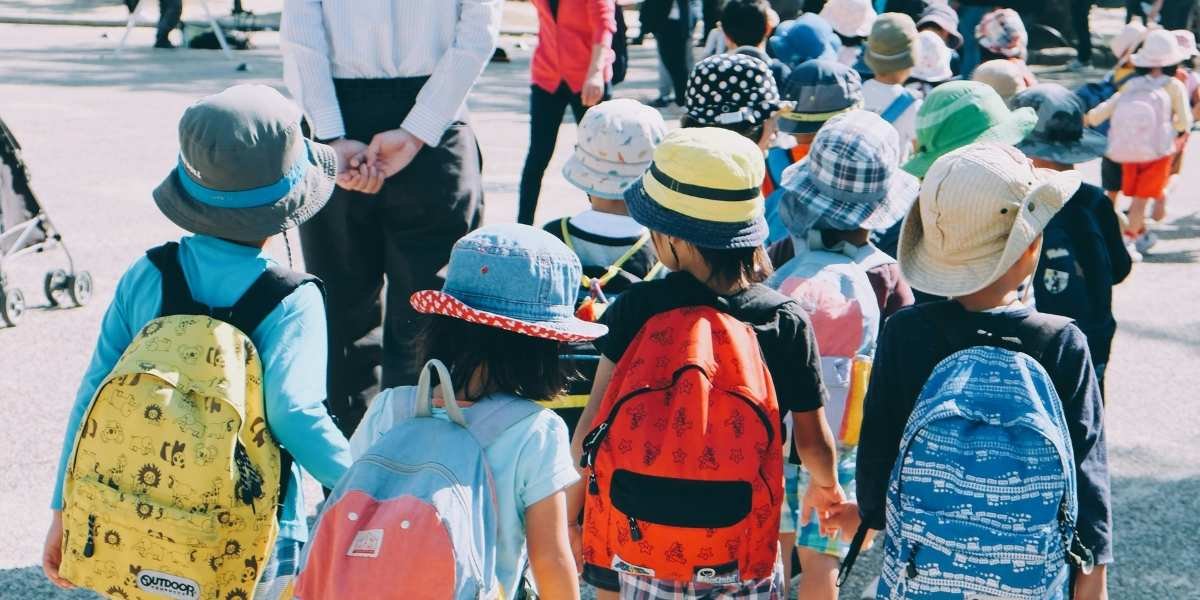
Portlands Under-5 Population Falls More Than One-Third

Photo Credit: Unsplash.com

The district’s consolidation review involves several factors, including current enrollment, available classroom space and the distribution of students across neighborhoods. The smaller population of young children provides additional demographic context, but it cannot independently determine which schools may experience enrollment declines.

Children currently younger than five will enter elementary education over several years, making their population size relevant to future enrollment projections. Actual enrollment will also depend on family relocation, school choice and the geographic distribution of students.

Portland Public Schools and Future Enrollment

Declining numbers of young children may eventually influence the number of students entering kindergarten and subsequent elementary grades. For school administrators, demographic projections can help inform staffing, classroom capacity and long-term facility planning.

However, population trends and school enrollment are separate measurements. A smaller under-five population does not automatically translate into an equivalent reduction in public school enrollment, particularly when families choose different educational options or move between neighborhoods.

District officials must therefore evaluate census figures alongside current enrollment records and projected student numbers before making decisions about school capacity.

Childcare Providers and Changing Family Service Needs

Childcare providers also have reason to monitor Portland’s changing population. Facilities serving infants, toddlers and preschool-aged children depend on the number of families seeking care, as well as their ability to access affordable and suitable programs.

A smaller population of young children could influence potential enrollment, but it does not necessarily mean demand for childcare will decrease at the same rate. Availability, costs, geographic access and parents’ employment arrangements can all affect demand.

Some neighborhoods may continue to experience limited childcare availability even as Portland’s overall number of young children declines. Provider-level enrollment records and local service-capacity data are therefore necessary to assess the practical effects.

Population Data Provides Context for Portland’s Family Services

Portland’s declining population of young children creates additional considerations for organizations responsible for early childhood education and family support programs.

Multnomah County is expanding early education capacity through its Preschool for All expansion, which aims to increase access to preschool for three- and four-year-olds. The program’s development demonstrates why demographic trends must be considered alongside existing demand, enrollment eligibility and service availability.

Although fewer young children may live in Portland than in previous years, that does not necessarily mean fewer families need public assistance or early learning services. Limited childcare spaces, affordability challenges and differences in neighborhood access can remain important issues.

Population information can help local officials evaluate where resources may be needed most. However, decisions about expanding or reducing programs require a broader assessment that includes enrollment records, service capacity and the needs of individual communities.

The decline also carries longer-term implications for Portland’s population structure. Changes in the number of young children can eventually influence the size of future school-age and working-age populations, although migration and other demographic developments may alter those outcomes.

For Portland families and service providers, the latest figures offer a clearer picture of how the city’s population is changing. Understanding those shifts will be important as education institutions, childcare organizations and local officials plan for future needs.

Frequently Asked Questions

How much has Portland’s population of children under five declined since 2010?

Portland’s population of children younger than five has declined by more than one-third since 2010, according to newly reported census figures. Their share of the city’s population has also decreased from approximately 6.4% to 3.9%.

What census data documents Portland’s declining child population?

The findings come from recently reported U.S. Census Bureau demographic data examining changes in Portland’s population since 2010. The figures show a substantial reduction in the number and proportion of children under five.

What factors are associated with Portland’s declining population of young children?

Lower birth rates are one contributing factor identified in discussions of Portland’s demographic changes. Migration and changes in the number of families living within the city may also influence the population, although the figures do not establish a single cause.

How could Portland’s declining child population affect school enrollment?

A smaller population of young children may influence future kindergarten and elementary school enrollment. However, actual enrollment depends on factors such as family migration, neighborhood populations and school choices.

What does Portland’s changing child population mean for childcare services?

The decline provides demographic information relevant to childcare planning, but it does not automatically indicate lower demand for services. Childcare availability, affordability, enrollment levels and neighborhood needs remain important considerations.