
Portland News

What Actually Counts as an “Open Position” and Why It Hurts Your Odds


Business owners often understand credit score and revenue as qualification factors, but “open financing positions” is a genuinely less intuitive concept that carries real weight in how a business gets evaluated. Understanding exactly what counts, and why it matters, helps a business owner see their own standing more clearly.

What Counts as an Open Position

An open position refers to any active, outstanding financing obligation currently being repaid, whether that’s a term loan with monthly payments, a merchant cash advance with daily or weekly debits, an existing line of credit with an outstanding draw, or any other structure requiring ongoing repayment. Fundivi’s self-underwriting engine treats one open position as the clear threshold and three or more as a watch-level signal, a specific, published number that most lenders never disclose this directly.

Why the Number of Positions Matters Separately From Total Leverage

It might seem like leverage, the total dollar amount owed relative to revenue, should capture everything relevant about existing debt on its own. But the number of separate positions carries genuinely distinct risk information beyond the raw dollar total. A business with one obligation at $3,000 per month faces a single point of repayment complexity. A business with four separate obligations totaling the same $3,000 per month faces considerably more operational complexity, coordinating multiple repayment schedules, multiple lenders, and multiple points of potential friction if any single relationship becomes strained.

Why Multiple Small Positions Often Signal Something Specific

A pattern of several smaller, overlapping financing positions frequently reflects a business that has struggled to access a single, sufficiently sized piece of financing and has instead pieced together capital from multiple sources over time, sometimes referred to informally within the industry as “stacking.” This pattern can develop innocently, a business takes a smaller advance to cover an immediate need, then takes another before the first is fully repaid because a new need arises, and the cycle continues. Regardless of how it develops, a lender evaluating a new request reasonably treats multiple open positions as a signal worth weighing carefully alongside the raw leverage figure.

How This Factor Interacts With the Product Matcher

The funding product matcher specifically asks about existing debt during its evaluation, meaning a business with several open positions may be steered toward a product structured to consolidate or work alongside that existing complexity more comfortably, rather than one that would simply add a fourth or fifth position to an already crowded repayment picture.

What a Business Owner Can Do About This Factor

Unlike some qualification factors that improve only gradually, open positions can sometimes improve relatively quickly through deliberate consolidation, paying off one or more smaller obligations using proceeds from a single, better-structured piece of financing. This approach can simultaneously reduce both the raw position count and, depending on the specific terms, the total leverage figure as well, addressing two related qualification factors through a single deliberate action.

Why Lenders Weigh This Factor So Heavily

From a lender’s perspective, multiple simultaneous open positions introduce a specific kind of risk that a single, larger obligation typically doesn’t. Each additional lender in the mix represents a separate relationship with its own collection practices, its own priority in the event a business experiences genuine cash flow difficulty, and its own potential to trigger a cascading problem if one position falls behind and affects a business’s ability to service the others. A business juggling several daily or weekly debit schedules simultaneously also faces considerably more day-to-day cash flow complexity than a business managing a single monthly payment, even when the total dollar amounts are comparable.

This complexity compounds during any period of revenue softness. A business with a single financing obligation facing a slow month has one conversation to manage if repayment becomes genuinely difficult. A business with four simultaneous positions facing the same slow month must manage four separate conversations, each with its own terms, its own tolerance for flexibility, and its own potential consequences for falling behind.

How to Get an Accurate Count of Your Own Open Positions

Arriving at an accurate count requires a careful review of recent bank statements, specifically identifying every recurring outgoing payment tied to a financing obligation rather than a routine operating expense. This can be genuinely harder than it sounds, since a daily or weekly debit tied to a smaller advance can sometimes blend into a business’s regular pattern of outgoing payments if a business owner isn’t deliberately looking for it. Setting aside time to review several months of statements specifically for this purpose, rather than relying on memory alone, produces a considerably more reliable count.

Why Position Count Sometimes Matters More Than the Underlying Dollar Amount

It’s genuinely counterintuitive that a lender might view a business with three small positions less favorably than a business with one considerably larger position, even when the larger position carries a bigger total dollar obligation. But this reaction makes more sense once you consider what each scenario actually implies about how a business accesses capital. A single, larger position suggests a business was able to secure sufficient financing from one source at once, typically the sign of a stronger underlying qualification profile. Multiple smaller positions accumulated over time more often suggest a business that couldn’t access sufficient capital from a single source and instead assembled it from several, a pattern that itself carries information about underlying qualification strength independent of the raw leverage total.

This is why the count and the dollar total function as genuinely separate signals rather than one being simply a proxy for the other. A business owner reviewing their own position count benefits from understanding both dimensions clearly, recognizing that even a manageable total leverage figure can still carry a less favorable position count if that total is spread across several separate obligations rather than consolidated into one.

Frequently Asked Questions

Does a single open position hurt my qualification outlook at all?

No. One open position clears the published threshold. The concern arises specifically around three or more simultaneous positions.

Does the type of obligation matter, or just the count?

The count itself is what the underwriting engine specifically evaluates, though the total dollar amount across all positions also factors into the separate leverage calculation.

If I consolidate multiple positions into one, does that genuinely help?

Yes, assuming the consolidation reduces your overall position count and doesn’t simply add a new position on top of the existing ones without paying them off.

Why do businesses end up with multiple open positions in the first place?

This often happens gradually, taking on a new obligation before a previous one is fully repaid, sometimes because a single source wasn’t willing to provide sufficient capital for the full need at once.

Does checking this factor require me to know my exact obligations?

Yes, an accurate count matters. Reviewing your bank statements for every recurring financing-related debit is the most reliable way to arrive at a genuinely accurate number.

Getting Started

Business owners can check their current position count directly using the underwriting engine, explore whether consolidation might genuinely help using the product matcher, and once an offer arrives, use the cost calculator to confirm it’s a genuine improvement over existing terms. For a closer look at how consolidation works in practice, Fundivi’s resource library covers the details in plain language.

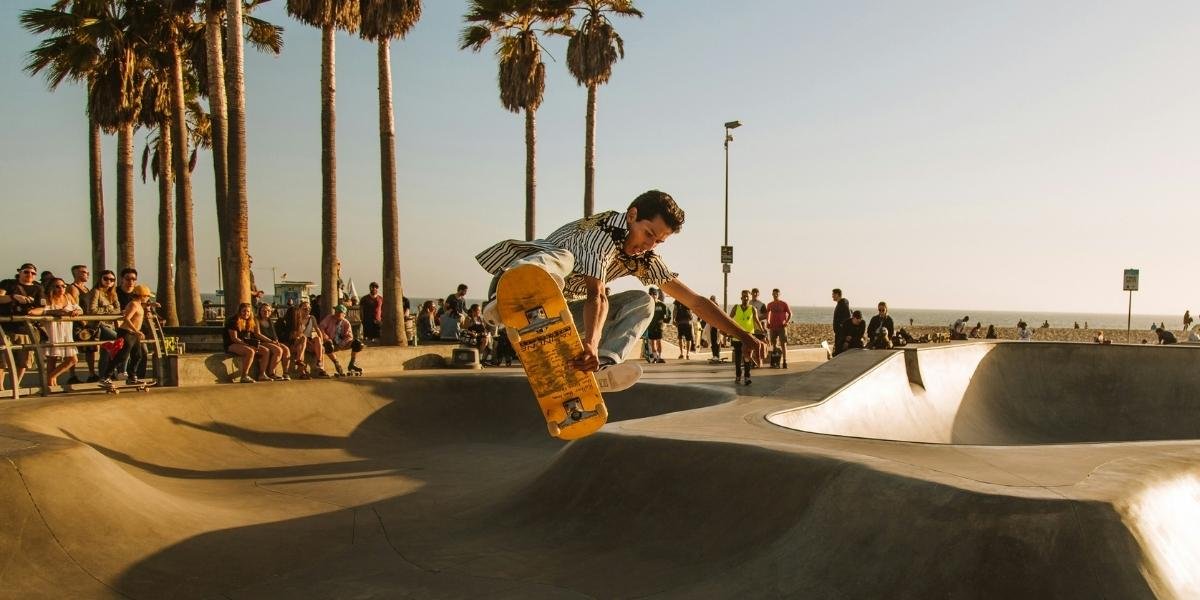
Dream Big City Plans Portland Dream Plaza 2.0 Expansion

Dream Big City is moving Portland Dream Plaza into a new phase, more than a year after the Central Eastside space first opened. The nonprofit is preparing renovations and new community-built features at SE 9th Avenue and Taylor Street. This report explains the plaza’s timeline, current expansion, programming and role in Dream Big City’s wider community work.

Key Takeaways

  • Portland Dream Plaza opened in summer 2025 at Southeast 9th Avenue and Taylor Street in Portland’s Central Eastside.
  • Dream Big City is now working on an expanded version of the site known as Dream Plaza 2.0.
  • The plaza includes skate features, basketball facilities, furniture and a large skateboard-shaped street mural.
  • Dream Big City has organized more than 170 community events over the past six years.
  • KPTV reported that the current renovation is expected to be completed around the beginning of October 2026.

Portland Dream Plaza Moves Into Its Next Phase

Dream Big City is preparing a major expansion of Portland Dream Plaza, the community recreation space it stewards at Southeast 9th Avenue and Taylor Street in Portland’s Central Eastside.

The current project follows the plaza’s original opening in summer 2025. Portland Bureau of Transportation records show that the site officially launched as a seasonal public street plaza that July, transforming a previously underused block into a space with skateboarding, basketball and community programming.

That timeline is important because the latest development is not the plaza’s initial opening. In a September 8, 2026 interview with OPB, Dream Big City founder and executive director Alex Murrell discussed what the organization calls “Dream Plaza 2.0,” a new phase intended to build on the original pilot.

KPTV reported in August that the site was preparing for renovations valued in the hundreds of thousands of dollars, with organizers targeting completion around the beginning of October. The project is expected to update and expand the recreational and community infrastructure already in place.

The Original Plaza Turned a Street Into Recreation Space

Portland Dream Plaza grew out of a partnership involving Dream Big City, the Portland Bureau of Transportation and the Central Eastside Industrial Council.

PBOT identifies the site as part of Portland’s Public Street Plaza Program. The original plaza brought community-built skate features, basketball facilities, furniture and a street mural to the Central Eastside location.

The plaza’s ribbon-cutting took place on July 22, 2025, alongside the launch of Dream Big City’s Fam Jam Block Party programming. PBOT later reported 14 events at Portland Dream Plaza during 2025.

A defining visual feature is a skateboard-shaped street mural measuring about 126 feet long and 34 feet wide. PBOT describes it as the largest painted skateboard mural in the United States.

The combination of recreation and gathering space distinguishes the plaza from a conventional street closure. Skateboarding and basketball can take place alongside music, art and organized community activities.

That mixed-use approach also reflects a broader interest in outdoor community spaces around Portland. Seasonal community art gatherings have similarly used shared public areas to bring residents together outside traditional indoor venues.

Dream Plaza 2.0 Adds New Skate and Arts Elements

The current expansion is intended to move Portland Dream Plaza beyond its initial pilot-stage infrastructure.

Pickathon described Dream Plaza 2.0 as a community skate and arts space being developed through a collaboration involving Dream Big City, Bora Architecture & Interiors, KPFF, Andersen Construction and Creative Neighborhoods.

Several modular components were designed for temporary use at the 2026 Pickathon festival before becoming part of the Central Eastside plaza. Those elements included seating modules and parts of a half-pipe, along with structures that could be adapted for art and performance uses.

The design process has also included community participation. Pickathon said engagement with skateboarders, young people and families helped inform the developing plaza, while KPTV reported that an August community event gave participants an opportunity to help create elements for the renovated skate ramps.

Bora Architecture & Interiors is contributing design work to the project. KPTV reported that the firm donated about $60,000 in services toward the renovation.

The new work therefore builds on the plaza’s existing skate and basketball facilities rather than replacing them with an unrelated use.

Dream Big City Connects Recreation With Community Programming

Dream Big City has used skateboarding, basketball, music, art and food as recurring elements of its community events across Portland.

OPB reported in September that the nonprofit has organized more than 170 events over six years. Those events have included live music, art, free meals and mentorship opportunities for young people.

Murrell told OPB that the organization’s focus is on youth programming.

“Our whole goal at Dream Big City is to create a safe, alcohol and drug-free space for youth.”

The nonprofit’s programming predates Portland Dream Plaza. Murrell described Dream Big City’s Fam Jam events as beginning with a small skate gathering before developing into larger community block parties with recreation, music, art and food.

The plaza gave that programming a more consistent physical location in the Central Eastside. Dream Big City serves as the steward of the site, a role also identified in Portland’s official plaza directory.

The Central Eastside Site Reflects Portland’s Plaza Strategy

Portland Dream Plaza is part of a broader city effort to convert selected streets and underused spaces into public gathering areas.

Portland City Council made the Public Street Plaza Program permanent in October 2025 after the initiative had operated as a pilot. The program includes partnerships with outside organizations that help steward individual plazas and organize activities.

That structure helps explain Dream Big City’s role. The nonprofit does not simply hold individual events at the site. It serves as the community partner responsible for activating Portland Dream Plaza through programming and ongoing stewardship.

Other parts of Portland are pursuing different models for expanding neighborhood recreation space. Current Slabtown park plans, for example, involve turning a vacant Northwest Portland parcel into a future public park through a separate city planning process.

Portland Dream Plaza differs because it repurposes street space rather than developing a conventional park parcel. Its recreation facilities and event programming operate within that street-plaza model.

The Expansion Builds on a Year of Plaza Use

The move toward Dream Plaza 2.0 follows more than a year of activity at the Central Eastside site.

PBOT said the original plaza was developed with skateboarding and active play as central features, while Dream Big City continued using the space for Fam Jam and Play Street events.

The plaza remained active into 2026. Dream Big City listed a June Fam Jam event at the site featuring skateboarding, roller skating, BMX, basketball, music and art. The organization has also used the plaza for mural work and other community activities.

The next phase is designed to add more durable and adaptable infrastructure to those uses. Pickathon’s description of Dream Plaza 2.0 emphasizes both skating and arts programming, broadening the physical design beyond recreation alone.

KPTV’s reported early-October completion target would mark the next milestone for a project that began as a seasonal public street plaza in 2025 and is now moving into a larger second phase.

Portland Dream Plaza Shifts From Pilot to Expansion

For Portland Dream Plaza, the central 2026 development is its transition from an initial street-plaza pilot toward a larger, more developed community space.

Dream Big City remains the plaza’s steward while new partners contribute design, construction and community input to Dream Plaza 2.0. The project retains the skateboarding, basketball and gathering functions that defined the original site while adding infrastructure intended to support art and performance activities.

The expansion also gives Dream Big City a more permanent setting for the type of community programming it has developed through more than 170 events over six years.

If the reported construction schedule holds, the beginning of October will mark the next stage for Portland Dream Plaza and its role in the Central Eastside.

Frequently Asked Questions

When did Portland Dream Plaza open?

Portland Dream Plaza opened in summer 2025, with a ribbon-cutting held on July 22. The current 2026 development involves the Dream Plaza 2.0 renovation and expansion rather than the initial opening.

Where is Portland Dream Plaza located?

Portland Dream Plaza is located at Southeast 9th Avenue and Taylor Street in Portland’s Central Eastside Industrial District. Dream Big City serves as the steward of the public street plaza.

What does Portland Dream Plaza include?

The plaza includes community-built skate features, basketball facilities, furniture and a large skateboard-shaped street mural. Dream Plaza 2.0 is expected to add new elements supporting skating, art and community activities.

What is Dream Plaza 2.0?

Dream Plaza 2.0 is the next phase of the Central Eastside plaza. Plans described by project partners include modular skate, seating, art and performance elements designed to expand the ways the space can be used.

What does Dream Big City do?

Dream Big City is a Portland nonprofit that organizes alcohol- and drug-free community activities centered on recreation, art, music, food and youth engagement. OPB reported that the organization has held more than 170 events over the past six years.