Portland News

Valiant Roofing Brings Experience and Local Expertise to Vancouver, WA

Finding a roofing company you can trust often feels like guesswork. The credentials look similar. The promises sound the same. What separates one contractor from another comes down to verifiable proof. Valiant Roofing, LLC has built its reputation in Vancouver, WA on exactly that: documented processes, third-party verified credentials, and over 400 reviews from real customers.

How Valiant Roofing Started

Jack Divine founded Valiant Roofing in 2018 with a small crew and a clear goal. He wanted to build a roofing company that treated every project like a system, not a scramble. In under 7 years, the company grew from a startup into a 40+-person operation serving homeowners and property managers across the Pacific Northwest.

That growth did not come from advertising alone. It came from repeat referrals, consistent execution, and earning credentials that require ongoing verification. The company now holds a BBB A+ rating, is highly rated on Google with hundreds of reviews, is highly rated on Facebook, and has accumulated 400+ verified reviews combined across Google, Yelp, BBB, and Angi. You can read those reviews at Valiant Roofing’s reviews page.

The Owens Corning Platinum Preferred Designation

Valiant Roofing Brings Experience and Local Expertise to Vancouver, WA

Photo Courtesy: Valiant Roofing, LLC

Fewer than 1% of roofers nationwide hold the Owens Corning Platinum Preferred Contractor designation. It is invitation only. To qualify, a contractor must pass licensing screening, carry $1M+ in general liability insurance, demonstrate financial stability, and show proven business performance. The company earned this designation and maintains it through ongoing compliance.

This credential matters for one practical reason: it unlocks the highest warranty tier that Owens Corning offers. Homeowners who hire Valiant Roofing receive lifetime workmanship coverage (the first 25 years non-prorated) and a 50-year material warranty. That level of protection is tied directly to the contractor’s certified status and is not available through standard installers.

A 6-Step Documented Process

Every Valiant Roofing project follows the same structured workflow. It begins when a real receptionist team answers the first call, collects the details, and schedules a roof inspection. No voicemail loops. No callbacks that never come.

Step two is a photo inspection with written notes that explain the condition of the roof, including leaks, ventilation, and decking. Step three delivers a written estimate based on those findings. Step four is a production handoff where the project moves from sales to the operations team. Step five is a supervised install day with in-house crews and a named site supervisor on site. Step six is a final cleanup and walkthrough with the homeowner.

This process exists because the company does not use subcontractors. Every crew member works directly for the company. That structure gives the company direct control over quality, timelines, and accountability on every job.

Services Beyond Roofing
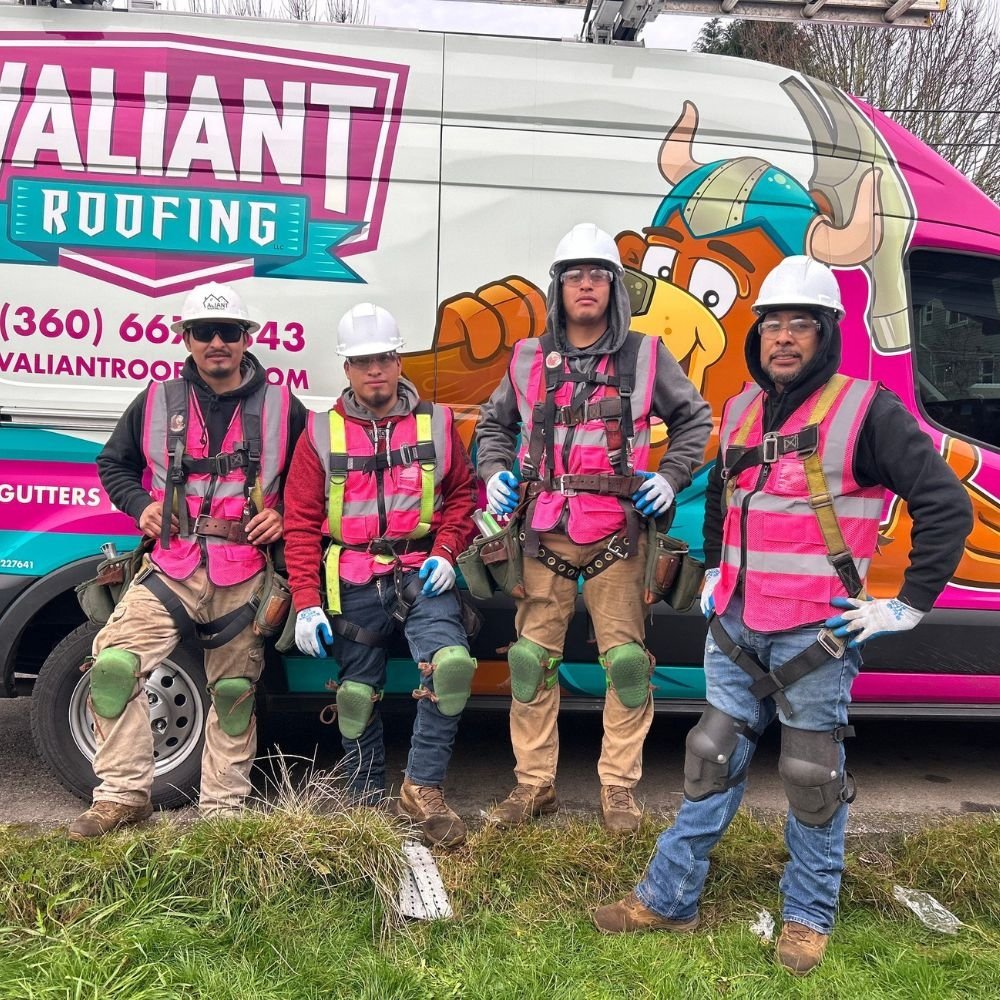
Valiant Roofing Brings Experience and Local Expertise to Vancouver, WA

Photo Courtesy: Valiant Roofing, LLC

Most roofing contractors stop at the roofline. Valiant Roofing offers a broader scope of exterior services. The company handles gutters, siding, decks, windows, Tesla Solar Roof installations, and Tesla Powerwall installations. Homeowners can address multiple exterior projects through a single contractor, which simplifies scheduling, communication, and warranty management.

The company operates 24/7, Monday through Sunday. Same-day emergency appointments are available. Financing options are also offered for homeowners who need flexible payment terms. The company is licensed in Washington (VALIARL813LM) and Oregon (CCB #227641). You can learn more about their service area at Valiant Roofing’s Vancouver, WA location page.

What Sets the Company Apart

Credentials, process, and accountability. The Owens Corning Platinum Preferred designation is held by fewer than 1% of contractors. The 6-step process is documented and repeatable. The crews are in-house with named supervisors. The reviews are public, verified, and consistent.

Valiant Roofing did not build its reputation on slogans. It was built on a system that shows up, does the work, and stands behind the result. For homeowners in Vancouver, WA, looking for a roofing company with proof behind every claim, the evidence speaks clearly.

360-740-7017 | valiantroofing.com


The Transformative Impact Of Matthew Cossolotto And PromisePower

By Avery Jensen

When considering the thriving landscape of personal growth and community resilience in Portland and beyond, one name increasingly surfaces: Matthew Cossolotto. With roots that echo the values of integrity and adaptability, Cossolotto’s approach centers on an idea that, while humble, offers both immediacy and lasting significance to the promise made in earnest. In an age where intentions are abundant but true follow-through is rare, Cossolotto’s message resonates powerfully with Oregonians who value authenticity and the ripple effect of individual action. His philosophy, known as PromisePower, has become more than just a self-help mantra; it is a rallying cry for trustworthiness, transformation, and tangible progress qualities that lie at the heart of Portland’s ethos.

Cossolotto’s path to prominence was shaped not by conventional opportunity, but by the steady churn of change. Raised in a family that relocated regularly, he learned firsthand the necessity of flexibility and the art of creating community wherever he landed. These experiences weren’t just points on a map; they were building blocks for a worldview where change was not a storm to be weathered, but a current to ride. This adaptive spirit is familiar to many Portlanders, whose city stands as a testament to resilience and reinvention in the face of shifting economic, social, and environmental tides.

Equally influential was his family’s commitment to reliability, a value often undervalued in modern culture. Cossolotto credits his older sister with teaching him that promises, when honored, create an unbreakable language of trust. This early influence became a lodestar for his career, inspiring his transition from high-level speechwriting and communications to a deeper focus on integrity and purposeful action. Before becoming an author and motivational speaker, Cossolotto worked behind the scenes with prominent leaders and organizations. Here, he observed the transformative potential of authentic communication, laying the groundwork for the approach he now shares with communities, organizations, and individuals craving meaningful connection and self-accountability.

Yet, it was a deeply personal vow made at his mother’s bedside that catalyzed the birth of PromisePower. In promising to complete a book she urged him to write, Cossolotto experienced the powerful alchemy of intention fused with responsibility. This was more than a task completed; it was a moment of profound fulfillment, a testament to the emotional and psychological gravity specific to a promise. This insight inspired Harness Your PromisePower and cemented his status as a leader in a movement where individual commitments hold both personal and communal significance.

Central to Cossolotto’s PromisePower philosophy is a sharp distinction: while goals and intentions are easily sidelined, promises engage a deeper sense of honor. When someone makes a promise, especially to themselves, it reflects their integrity. This concept is especially meaningful in local contexts like Portland, where social contracts, whether between neighbors, activists, or small business owners, form the glue of communal trust.

Cossolotto doesn’t just theorize; he demonstrates. Through storytelling, he recounts the journeys of public figures such as Oprah Winfrey and everyday individuals who made and kept transformative promises. These narratives drive home the universality of the concept. Whether it’s civic leaders upholding justice or neighbors pledging to care for local streams, the act of promise-making bridges the personal and the societal. For a city like Portland, continually striving to balance progressive vision with grassroots action, PromisePower offers a practical, accessible framework to bridge that gap.

His appeal lies in both his accessibility and his conviction. Avoiding jargon, he invites everyone from corporate teams to high school students to engage with the act of making true promises. Cossolotto’s signature events, such as Make a Promise Day, have sparked waves of action across various communities, inspiring people to center their lives around meaningful personal and communal commitments. The result is a collective momentum for change that mirrors the activist heart of Portland itself.

The Transformative Impact Of Matthew Cossolotto And PromisePower

Photo Courtesy: Matthew Cossolotto

Equally important is the recognition that some of the most potent promises are the ones made privately to overcome fear of public speaking, to launch a new project, or to be kinder to oneself. These self-promises serve as the catalyst for growth, often preceding larger societal contributions. In an era when our screens and daily routines often leave us feeling disconnected or adrift, PromisePower offers a tool for realignment, not just as individuals but as members of something greater. This reinvigoration of the social fabric is especially salient for Portland, a city with a long history of embracing civic engagement as a force for good.

Cossolotto’s method is guided by two intertwined themes: the joy and necessity of effective communication, and the enduring power of kept promises. His background in speechwriting allows him to craft messages that are intellectually stirring, emotionally resonant, and highly practical. For Portland’s diverse and dynamic population, activists, artists, neighbors, and small business owners, this synthesis rings true. His approach provides a blueprint for fostering cultures of responsibility across workplaces, families, and entire communities.

As Portland grapples with rapid transformation politically, environmentally, and culturally, the lessons drawn from PromisePower feel urgently relevant. Cossolotto’s vision for a more accountable and connected world starts with a simple but profound shift in mindset: seeing promises not as burdens, but as opportunities for fulfillment and collective betterment. His call to action echoes daily in the city’s neighborhoods, coffee shops, and community gardens: real change begins with the courage to promise, and the consistency to deliver.

Ultimately, Matthew Cossolotto’s contribution lies not only in his eloquent advocacy for promises but in his demonstration of their catalytic effect. Through PromisePower, he’s created a beacon for those seeking more from themselves and their communities. As Portlanders know well, progress often begins in small acts of trust and the determination to see them through. In celebrating the power of a promise, we honor the best of who we are individually and together, lighting the way toward a city and a world, rooted in integrity and transformative hope.

Portland’s Oregon Zoo Says Farewell to Beloved Lion Zawadi Mungu

The Oregon Zoo announced on April 2, 2026, the passing of Zawadi Mungu, a cherished African lion who had led the zoo’s pride for more than a decade. At the age of 18, Zawadi was among the oldest male lions in North America, a symbol of resilience and longevity in managed care. His death marks the end of an era for the Oregon Zoo, where he had become a central figure for both the pride and the zoo community.

Zawadi Mungu’s Leadership and Legacy

Zawadi was widely admired for his leadership, both within the pride and as a figure of strength for the zoo. As the male leader of the Oregon Zoo’s African lion pride, Zawadi’s role went beyond maintaining the pride’s social structure. He was known for his calm presence and his ability to raise cubs, earning him the title of “Father of the Year” in recognition of his important role in nurturing the next generation of lions.

Zoo staff frequently praised Zawadi for his patient nature and commanding presence, which were evident in his interactions with the pride. His ability to keep the group cohesive and balanced made him an invaluable figure for the zoo’s animal care team, who viewed him as the anchor of the exhibit.

As he aged, Zawadi faced the challenges common to older lions. His health began to decline, and in recent years, zoo staff implemented a variety of measures to support him. These included physical therapy, cold-laser treatments, and changes to his habitat to ensure his mobility. Despite these challenges, Zawadi’s resilience continued to shine, and he remained a key figure in the zoo’s African lion exhibit until his death.

Notable Longevity in Managed Care

Zawadi’s 18 years of life placed him among the oldest male lions in North America, a remarkable achievement given the typical lifespan of African lions. In the wild, African lions usually live between 10 and 14 years, while those in managed care may live slightly longer—15 to 20 years. Reaching 18 years of age speaks to the exceptional care Zawadi received at the Oregon Zoo, where staff dedicated themselves to providing him with the best possible environment for both physical and mental well-being.

His advanced age was an exceptional case, even among zoo lions. Male lions in captivity typically face many health challenges as they age, with many not reaching such advanced years. The zoo’s dedicated veterinary team worked tirelessly to ensure Zawadi’s comfort, providing medical support and adjustments to his living conditions to meet his evolving needs. These efforts allowed him to remain active and engaged with the pride throughout his later years.

The Oregon Zoo’s Role in Lion Conservation

Zawadi’s life was a reminder of the importance of conservation efforts aimed at protecting African lions, a species that has been significantly impacted by habitat loss, poaching, and human-wildlife conflict. African lions are classified as a vulnerable species by the International Union for Conservation of Nature (IUCN), with populations declining by more than 40 percent in the past three decades.

As one of the oldest male lions in managed care, Zawadi’s legacy is intertwined with the Oregon Zoo’s ongoing commitment to lion conservation. The zoo participates in the Species Survival Plan (SSP), a collaborative effort among accredited zoos to protect and manage genetic diversity within species. This program plays a vital role in ensuring the long-term survival of African lions both in captivity and in the wild.

Beyond its role in managed care, the Oregon Zoo is deeply involved in global conservation initiatives. Through partnerships with organizations like the Niassa Carnivore Project, the zoo helps protect wild lion populations in Africa, working to reduce poaching and safeguard critical habitats. The zoo’s outreach efforts emphasize the importance of these conservation initiatives, raising awareness about the challenges facing lions in the wild and the role zoos play in preserving endangered species.

Zawadi Mungu’s Impact on the Community

The announcement of Zawadi’s passing has sparked an outpouring of tributes from the Portland community and beyond. Many visitors and staff members who had the privilege of seeing Zawadi in person shared memories of his commanding presence and the joy he brought to the zoo’s African lion exhibit. His role in the zoo’s conservation message also resonated with many who saw him as a symbol of the need for wildlife protection.

Zawadi’s impact extended beyond his time at the zoo. His life served as a reminder of the importance of preserving biodiversity and protecting species that are at risk of disappearing from the wild. In the wake of his passing, the Oregon Zoo has renewed its commitment to educating the public about the challenges facing African lions and the ongoing efforts to protect them.

Through his leadership and presence, Zawadi became an ambassador for conservation, demonstrating the vital role that zoos play in preserving species and inspiring future generations to care about wildlife. His passing has reaffirmed the zoo’s dedication to continuing this work, with a focus on maintaining healthy populations of African lions and other endangered species.

A Continuing Commitment to Lion Conservation

The Oregon Zoo’s efforts to conserve African lions go beyond its in-house breeding programs. In addition to managing lions in captivity, the zoo has long been involved in supporting field-based conservation initiatives aimed at protecting lions in their natural habitats. Through these programs, the zoo provides funding, research, and education, helping local communities in Africa engage with conservation efforts and reduce human-wildlife conflict.

Zawadi’s passing highlights the challenges that lions face in the wild, but it also serves as a reminder of the critical work that zoos like the Oregon Zoo are doing to safeguard the species for the future. The zoo continues to support global lion conservation through partnerships with field organizations and by raising awareness about the importance of protecting lions and their habitats.

How Mid-Size Cities Are Dealing With Rising Crash Rates, And What Macon, Georgia Can Teach the Rest of the Country

By: Karen Ellison

A Problem That Isn’t Limited to Big Metros

When people think about dangerous roads, they tend to picture sprawling freeways in Los Angeles or rush-hour gridlock in New York. But some of the sharpest increases in traffic fatalities over the past several years have come from mid-size cities, places like Portland, Macon, and dozens of other communities that sit between small-town and major metro.

These cities share a common challenge: road infrastructure built for a different era, traffic volumes that keep climbing, and limited resources to address the gap between the two.

Macon, Georgia: A Case Study in Highway Pressure

Few mid-size cities illustrate this challenge more clearly than Macon, Georgia. Sitting at the junction of I-75 and I-16 in the heart of Central Georgia, Macon serves as a crossroads for commercial freight, commuter traffic, and long-distance travelers.

I-75 is one of the busiest north-south trucking corridors in the eastern United States, carrying tractor-trailers between Atlanta, Florida, and points throughout the Southeast. I-16 is the sole direct highway connecting Atlanta’s distribution network to the Port of Savannah, one of North America’s busiest container ports. That means Bibb County absorbs a constant flow of heavy truck traffic on top of its own local commuter base.

State data consistently ranks Bibb County among Georgia’s highest for motor vehicle crashes. The volume of collisions, the severity of injuries, and the complexity of cases involving commercial vehicles have all been trending upward.

What Makes These Cities Vulnerable

Mid-size cities like Macon and Portland face a unique set of conditions that drive crash rates higher.

Infrastructure that hasn’t kept pace. Highway interchanges, surface streets, and pedestrian crossings in many of these cities were designed decades ago for lighter traffic loads. Ongoing construction, like the work around the I-75/I-16 interchange in Macon, creates temporary hazards that can persist for years.

A mix of traffic types. Unlike purely urban or purely rural areas, mid-size cities see a volatile mix of local commuters, commercial trucks, rideshare vehicles, cyclists, and pedestrians all sharing the same corridors. That mix increases the number of potential conflict points on any given stretch of road.

Limited public transit options. Without robust transit systems, more people drive, and more miles driven means more exposure to crash risk. Macon and cities like it remain heavily car-dependent, which puts more vehicles on roads that are already strained.

The Human Cost Goes Beyond Statistics

Behind the crash data are real people dealing with life-altering consequences. A rear-end collision on I-75 might look like a minor fender bender from the outside, but herniated discs, traumatic brain injuries, and chronic pain conditions frequently follow what initially seemed like a routine wreck.

What many people in these situations don’t realize is that the quality of legal representation they choose can dramatically affect their outcome. Research and legal professionals consistently point to specific qualities, like trial experience, local court knowledge, and specialization, as the factors that separate effective advocates from those who simply process claims. Understanding what makes the best personal injury lawyer in Macon GA stand out is valuable information for anyone living in or traveling through a high-traffic corridor.

Proving Fault Isn’t Always Straightforward

In cities where traffic patterns are complex and multiple types of vehicles share the road, determining who caused an accident can be more complicated than it first appears. Georgia follows a modified comparative negligence rule, which means an injured person’s compensation can be reduced, or eliminated entirely, based on their share of fault.

Insurance companies in these cases aggressively argue that the injured party contributed to the crash. Countering those arguments requires thorough evidence collection, expert analysis, and a deep understanding of how Georgia law handles fault allocation. For residents of Central Georgia, knowing how a personal injury lawyer in Macon GA proves negligence provides a clearer picture of what it takes to protect a claim in this legal environment.

Why Local Expertise Matters in Mid-Size Markets

One pattern that stands out across mid-size cities is the importance of local legal knowledge. In places like Macon, the courts, the judges, the jury pools, and even the roads themselves are part of the equation when building a case after a serious crash.

A Macon personal injury lawyer who practices in Bibb County Superior Court regularly has an understanding of local procedures and tendencies that an out-of-area firm simply cannot replicate. That local advantage extends to relationships with area medical providers, familiarity with accident hotspots along I-75 and I-16, and knowledge of how local insurance adjusters handle claims in the region.

For cities like Portland, the same principle applies. Local attorneys understand the specific road hazards, court systems, and community dynamics that shape case outcomes in ways national firms often miss.

What These Cities Can Do

There’s no single fix for rising crash rates in mid-size cities, but a combination of approaches can make a meaningful difference.

Accelerate infrastructure upgrades. Prioritizing interchange redesigns, protected pedestrian crossings, and dedicated cycling infrastructure reduces conflict points and creates safer corridors for all road users.

Invest in data-driven enforcement. Identifying high-crash corridors and concentrating enforcement resources there, particularly during peak traffic hours, has been shown to reduce crash frequency in comparable cities.

Expand public transit. Reducing car dependency takes vehicles off the road. Even modest transit investments in mid-size markets can shift commuter patterns enough to ease pressure on overburdened highways.

Promote community awareness. Residents who understand the specific risks on their local roads are better equipped to drive defensively, avoid known hazard zones, and respond effectively if a crash does occur.

Looking Ahead

Mid-size cities across the country are growing. Their road networks are under increasing strain. And the consequences of that strain, measured in injuries, fatalities, and shattered families, are mounting.

Cities like Macon and Portland are on the front lines of this challenge. The lessons they learn about infrastructure investment, traffic management, and community safety will shape how the next generation of mid-size cities handles the same pressures.

In the meantime, the most practical thing any resident or traveler can do is stay informed, drive defensively, and know where to turn if something goes wrong on the road.

Disclaimer: The content in this article is provided for general knowledge. It does not constitute legal advice, and readers should seek advice from qualified legal professionals regarding particular cases or situations.