

Amberton University Continues to Redefine Higher Education for Working Adults

By: Matthew Brooks
“We were founded to serve working adults. And every decision we make still honors that mission,” says Dr. Carol A. Palmer, President of Amberton University.
As traditional higher education faces challenges like declining enrollment, rising tuition, and evolving workforce needs, Amberton University continues to stand apart. With over 50 years of history, the institution remains focused on one core audience: working adults who require flexible, affordable, and career-relevant education.
Founded for Adults, Built for Their Reality
Amberton University was established in 1971 as an extension of Abilene Christian University. By 1982, it became fully independent, with a clear mission to serve adult learners. From the outset, Amberton chose not to follow the traditional college format.
There are no dorms, sports teams, or student clubs. Instead, every resource is focused on academics and student support.
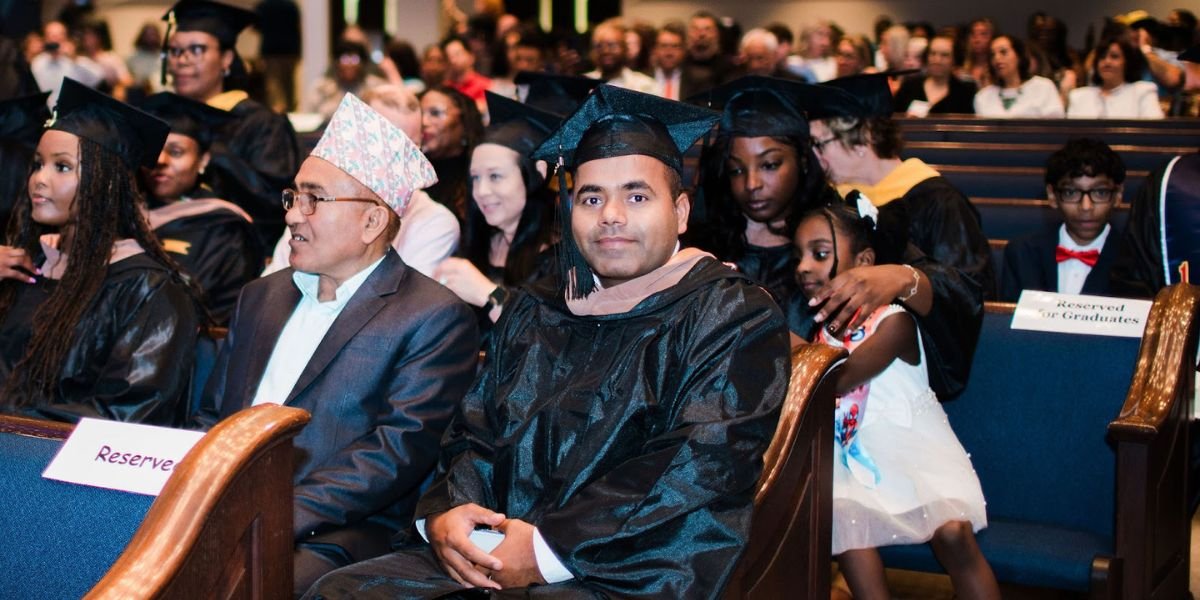
Today, the average student is 38 years old, with many being employed full-time, many raising families. Amberton’s class schedules, online access, and learning formats are designed to meet these students’ needs.
“We don’t expect students to fit our schedule,” says Dr. Palmer. “We’ve designed the university around their lives.”
Flexible Programs With Real Impact
Amberton operates year-round with four 10-week terms. Students can take courses in-person, online, or through hybrid formats. Many graduate programs are available entirely online. Weeknight and Saturday classes are available for students who work during the day.
Many courses are led by faculty who hold terminal degrees and actively work in their respective fields. There are no teaching assistants. Professors grade their own assignments and maintain close engagement with students throughout each term.
Dr. Ken Johnson, a senior faculty member with over 40 years at Amberton, explains:
“We’re not theorists. We’re practitioners. And students appreciate that we’re available, responsive, and grounded in the real world.”
Degrees with Purpose, Not Padding
Amberton only offers degrees that align with current workforce needs. These include clinical mental health counseling, applied artificial intelligence, healthcare administration, business, leadership, and training and development.
Every course incorporates practical skills that students can apply in their careers, from AI tool fluency to project management and trauma counseling strategies.
In 2024, the university completed a thorough curriculum update, incorporating artificial intelligence across all disciplines and expanding ethics and practical applications into each course.
“We don’t offer abstract degrees,” Dr. Palmer explains. “We offer tools for careers that are relevant today.”
A Pricing Model That Makes Sense
Amberton has made a deliberate choice not to follow the high-cost trend of traditional universities. Tuition is $325 per credit hour. Many graduate programs cost less than $12,000 in total. Even the 60-hour Clinical Mental Health Counseling degree costs under $23,000.
There are no hidden fees. Tuition details, program outlines, and course catalogs are publicly available, and no personal information is required to access them.
“We’re transparent about everything,” says Dr. Palmer. “Transparency is part of our service.”
Strong Results for Career Growth
Amberton’s approach produces notable results. According to official student data:
- 97% of eligible students were employed during enrollment
- 60% received a promotion or raise after starting their program
- 90% said their education directly influenced their career advancement
Graduate program completion rates are 54%. Meanwhile, over 93% of students reported that their degree met their personal or professional goals. And 97% of graduates said they would choose Amberton again if given the opportunity.
A Culture of Service and Respect
Amberton’s values are expressed through its Six Pillars of Service Excellence: Welcoming, Knowledgeable, Professional, Initiative, Excellence, and Communication.
These principles guide how staff and faculty engage with students: by listening, solving problems efficiently, and treating everyone with dignity.
The university’s Christian foundation also plays a role in its culture. While no religious affiliation is required for admission, Amberton’s leadership and faculty affirm Christian values that emphasize ethics, honesty, and service.
“We treat every student like they matter. Because they do,” says Dr. Palmer. “That’s not just policy. It’s our culture.”
Programs That Evolve With the Times
Amberton continues to expand and adapt its offerings. Recent additions include:
- Master of Science in Applied Artificial Intelligence
- MBA in Finance
- Master of Healthcare Administration
- Master of Science in Training & Development
The AI degree, in particular, has drawn attention for its practical structure. Rather than focusing solely on coding or theory, the program teaches students how to use AI tools to address real business problems.
But AI is not limited to just that program. Every student at Amberton now receives AI literacy training, tailored to their field. From counseling to leadership to business tracks, this skill is included.
“If we don’t prepare students for the tools of today, we’re not doing our job,” Dr. Palmer says.
Final Word
Amberton University remains one of the few institutions that has maintained a clear focus on its mission. While many institutions focus on prestige or profit, Amberton stays centered on people: working adults who need education that is relevant, flexible, and affordable.
Through practical degrees, reasonable tuition, responsive faculty, and a strong ethical foundation, Amberton is demonstrating what higher education can be when it puts common sense and students first.
“We’re not trying to be everything to everyone,” Dr. Palmer says. “We’re trying to be exactly what our students need. And that’s enough.”
For more information on the university’s policies, new curriculum, and/or application process, visit Amberton.edu.